
How to read a wine label without feeling lost
You are standing in the wine aisle, bottle in hand, staring at a label like it is written in another language. Sometimes it literally is. Here is everything you actually need to know, no sommelier certification required.
The Basics Every Label Has
Producer or Winery
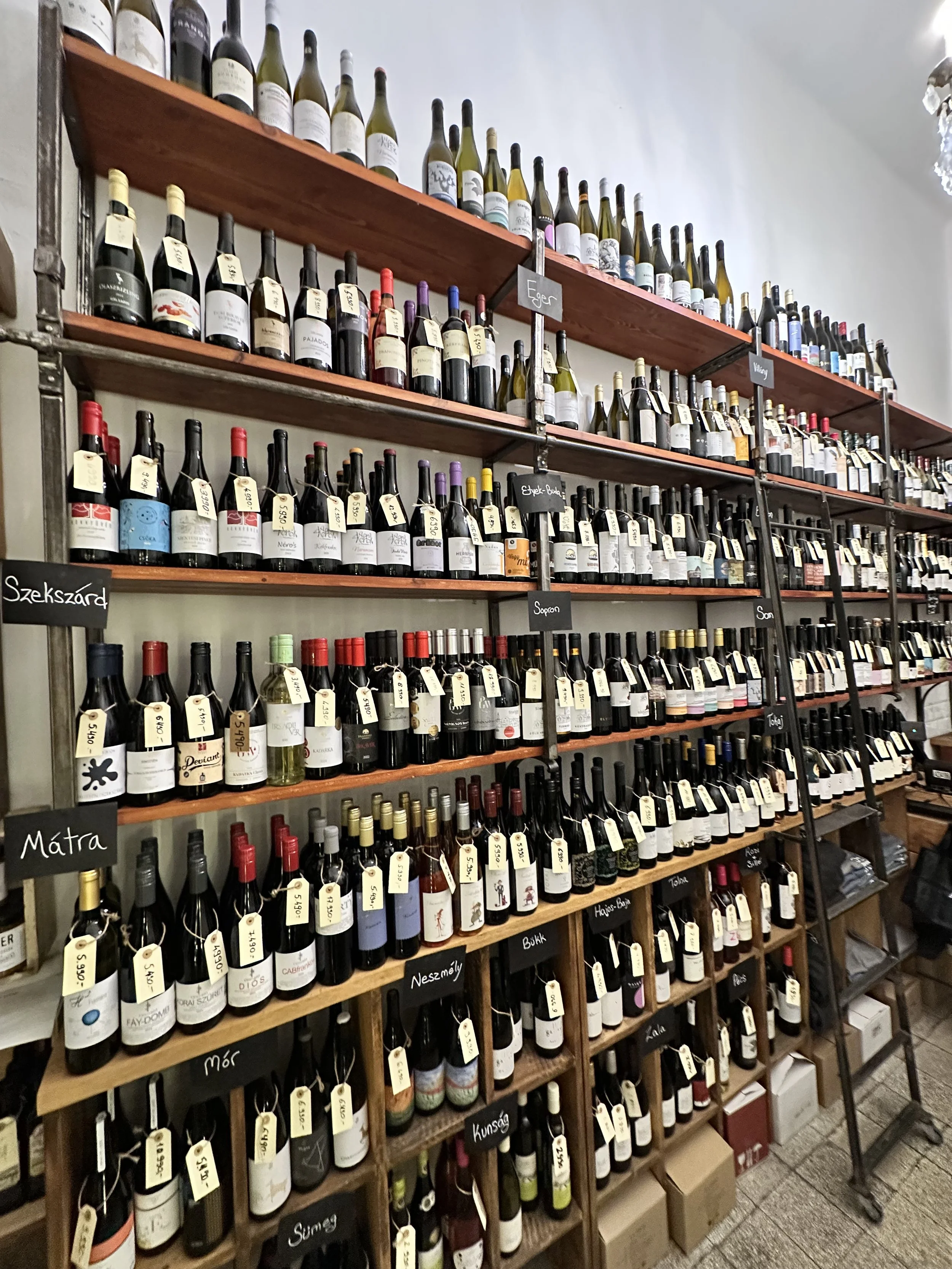
A selection of Hungarian wine in Budapest.
This is who made it. Think of it like the brand name. Sometimes it is a family name, sometimes a place, sometimes something poetic and vague.
Region or Appellation
Where the grapes were grown. This matters more than most people realize. "Napa Valley," "Burgundy," "Rioja" all tell you a lot about what style to expect. In the U.S., these designated regions are called AVAs (American Viticultural Areas). Read my AVA post here.
Vintage
The year the grapes were harvested. Not when it was bottled, not when you bought it. A rough weather year in a region can mean a tougher wine; a great year means something special.
Grape Variety (Sometimes)
American and Australian wines usually tell you the grape right on the front: Cabernet Sauvignon, Chardonnay, Pinot Noir. European wines often do not. They lead with the region instead. This brings us to a good example.
Alcohol by Volume (ABV)
Found in small print on the front or back. Under 12.5% tends to be lighter and crisper. Over 14.5% is fuller-bodied and richer. It is a quick cheat code for what you are getting into.
Fun Facts
"Reserve" means almost nothing in the U.S. It has no legal definition, so any winery can use it. In Spain and Italy, it carries strict legal requirements.
Heavier bottle does not mean better wine. Heavy glass is a marketing choice, not a quality signal.
Some of the world's most expensive wines have the most boring labels. Pétrus, one of Bordeaux's most sought-after bottles, is famously understated.
The color of the capsule on top has no meaning. Purely decorative.
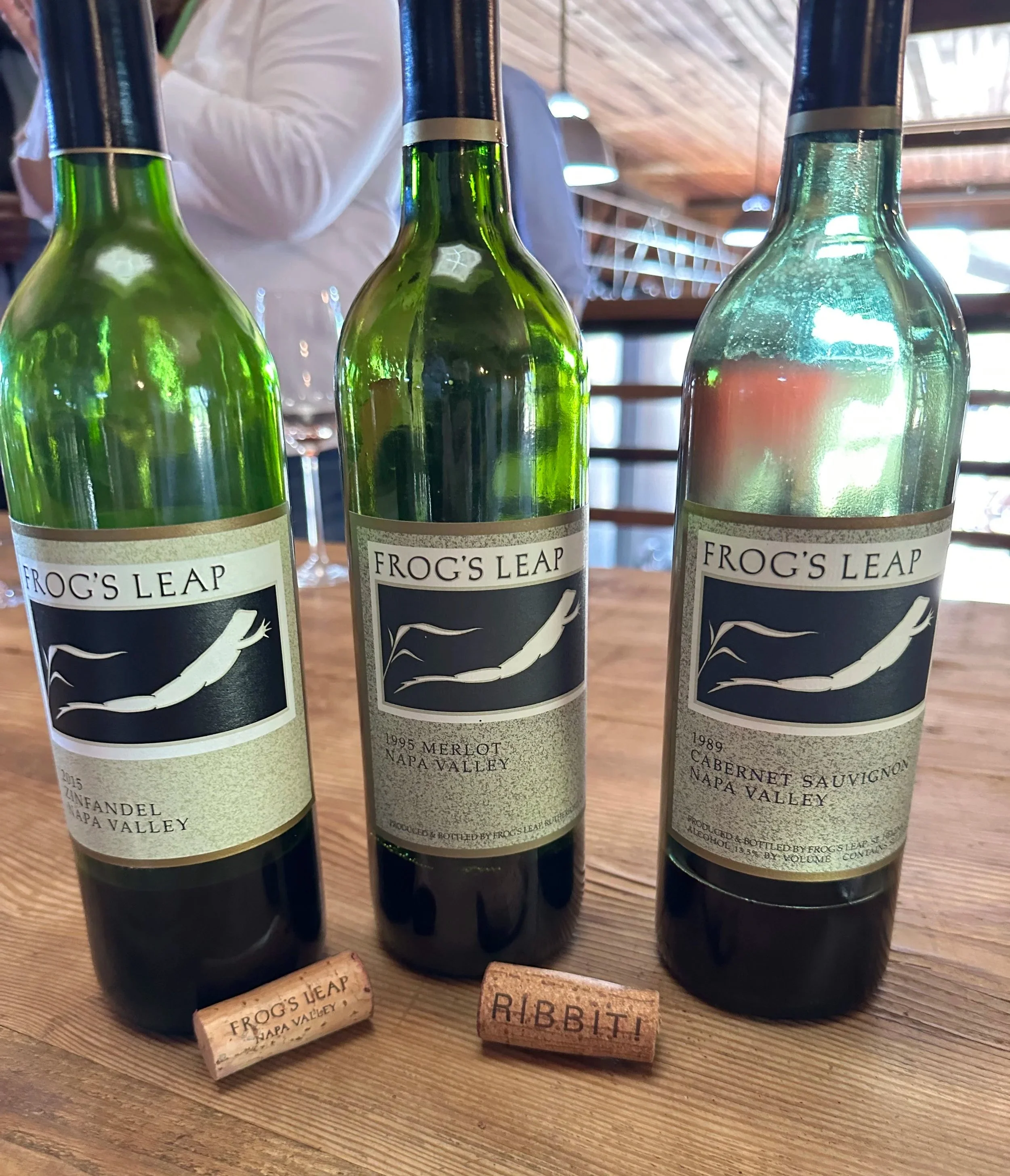
A few Frog’s Leap bottles across multiple vintages.
Rules Behind the Label
Ever wonder why a bottle can say "California Chardonnay" but not be 100% Chardonnay from California? There are actual federal rules governing this, set by the TTB (the Alcohol and Tobacco Tax and Trade Bureau).
If a grape variety is listed, at least 75% of the wine must come from that grape. If a state or county is listed, 85% of the grapes must be from that region. And if an AVA is listed, that threshold rises to 95%.
So the more specific the label, the stricter the rules. A bottle saying "Napa Valley Cabernet" is held to a much tighter standard than one that just says "California Red."
One step further is "Estate Bottled." This means 100% of the grapes were grown on land owned or controlled by the winery, and that every step of production happened at that same property within the same AVA. It is one of the most transparent claims a label can make and genuinely worth noting when you see it.
Some states go even further on geographic rules. Oregon maintains some of the strictest wine labeling regulations of any state. If an Oregon label lists a specific AVA, 100% of the grapes must come from Oregon and 95% from that named appellation. On top of that, for most named grape varieties, 90% of the wine must be made from that grape, compared to the federal floor of 75%. There are 18 varieties exempted from Oregon's 90% rule, including Cabernet Sauvignon, Syrah, and Merlot, as these have a long history of being used for blending in their home European regions.
Washington largely follows TTB federal guidelines, requiring 85% for AVA claims, though if the word "Washington" appears on the label, 95% is required.
The takeaway: the more specific the label, the more it is legally required to back that claim up.
The Back Label
Do not ignore it. The back label is where wineries speak directly to you: tasting notes, food pairings, a bit of the story. It is marketing, yes, but it is genuinely useful when deciding between two bottles.
You will also notice a "Contains Sulfites" statement on nearly every bottle you pick up. That is a federal requirement, not a warning to panic about. A full breakdown of what sulfites actually are and whether they deserve their bad reputation is coming in a future post.
QR Codes and Digital Spec Sheets
More and more wineries are adding QR codes to their labels, and they are worth scanning. Some link to basic marketing pages, but others take you to a full technical spec sheet with information you will never find on the label itself: residual sugar levels, pH, titratable acidity, harvest dates, barrel aging details, and clone or vineyard block information. Small producers especially tend to share this level of detail for the wine nerds paying attention. If you see a QR code on a bottle you are curious about, it takes five seconds and you might be surprised what is in there.
References and Further Reading
Wine Folly: How to Read a Wine Label — a visual, beginner-friendly breakdown of every label element
TTB: Anatomy of a Wine Label — the federal government's own interactive label tool, click on any element for the official rules
Decanter: How to Understand Wine Labels — good breakdown of how European labeling differs from American
Napa Valley Wine: How to Read a Wine Label — approachable guide with helpful tips throughout
Oregon Wine Resource Studio: Labeling Regulations — the full breakdown of Oregon's stricter standards straight from the source
