
Inside the CMS Deductive Tasting Workshop
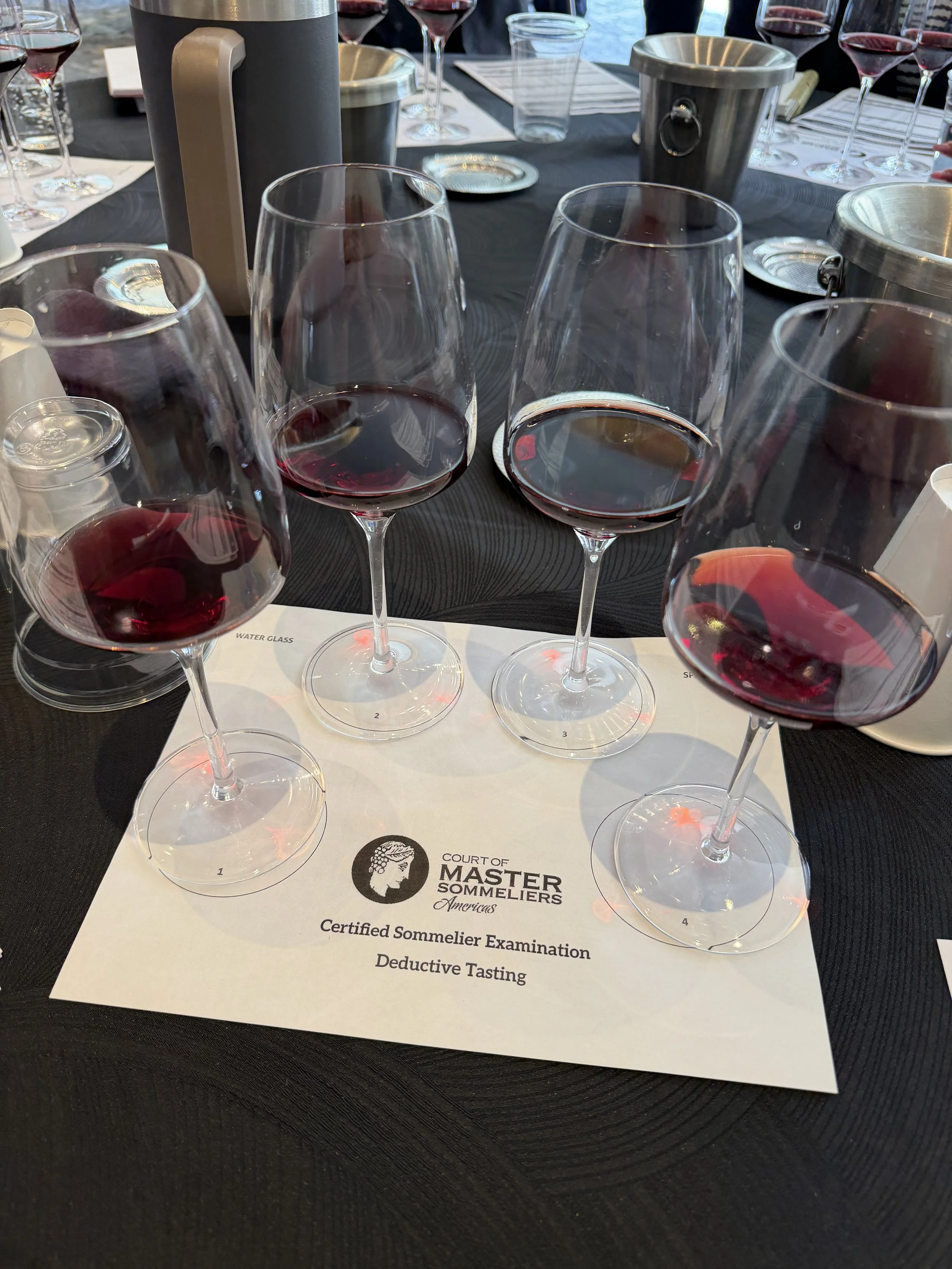
If “How to Taste” was the down and dirty primer, this is the field report. I spent a day at the Court of Master Sommeliers deductive tasting workshop, the one that runs the day before the Certified exam, and walked away with a much clearer sense of how prepared I am for the exam. There’s surprisingly little written about what this workshop looks like from the inside, so consider this the guide I wish existed before I showed up.
Who this course is for
The prerequisite is simple: you need to have already passed the CMS Introductory course. Beyond that, the room is a mix. About half the people at my table were sitting the Certified exam the next morning. The other half, myself included, were there to stress test where we stand before committing to a registration date. One of the Master Sommeliers running the room mentioned there’s a guy who shows up to this workshop a few times a year just for fun, no exam aspirations attached. You don’t have to be registered or even close to registered. You just have to show up ready to work!
The course runs roughly every two or three months across the US, always slotted the day before the Certified exam itself, and it uses the same deductive tasting grid you’ll be tested on.
How the day is structured
You taste 20 wines over the course of the day in a small group format, working through the grid alongside a Master Sommelier. My table had six students and one MS. We went around the table calling out our specifications on each wine and talked through our reasoning out loud, comparing notes on why we landed where we did. The MS would step in when something was off, explain why, and flag the common traps people fall into.
The tasting itself was built as a horizontal comparative flight, wines with real overlap in characteristics that get confused for each other, but with a key difference buried in there that you had to catch. I’m not going to tell you which wines or which comparisons, partly because CMS publishes the authorized testable wine list anyway, and partly because you’ll get more out of sitting with the confusion yourself than reading my notes on it.
A small peak at four red wines we tasted. The Biale Zinfandel was a standout favorite.
We closed the day with a mock blind tasting, two whites and two reds, 30 minutes on the clock. That’s 15 minutes tighter than the real thing. The actual Certified exam gives you 45 minutes for the same four wines, so the mock was deliberately harder than exam day, which is exactly the point. After time was up, we went through the grids together, and this was the only session all day where CMS actually told us what was in the glass.
What the deductive tasting grid actually is
The grid itself grew out of the Court’s original mission: giving working sommeliers a repeatable, structured way to describe a wine to a guest tableside, not just recite tasting notes for their own sake. It walks you through appearance, nose, and palate in a fixed order, then pushes you toward an initial conclusion on climate and likely grape before landing on a final call covering vintage, variety, and origin. Every level of CMS certification, from Certified through the Master Sommelier exam, runs on some version of this same grid.
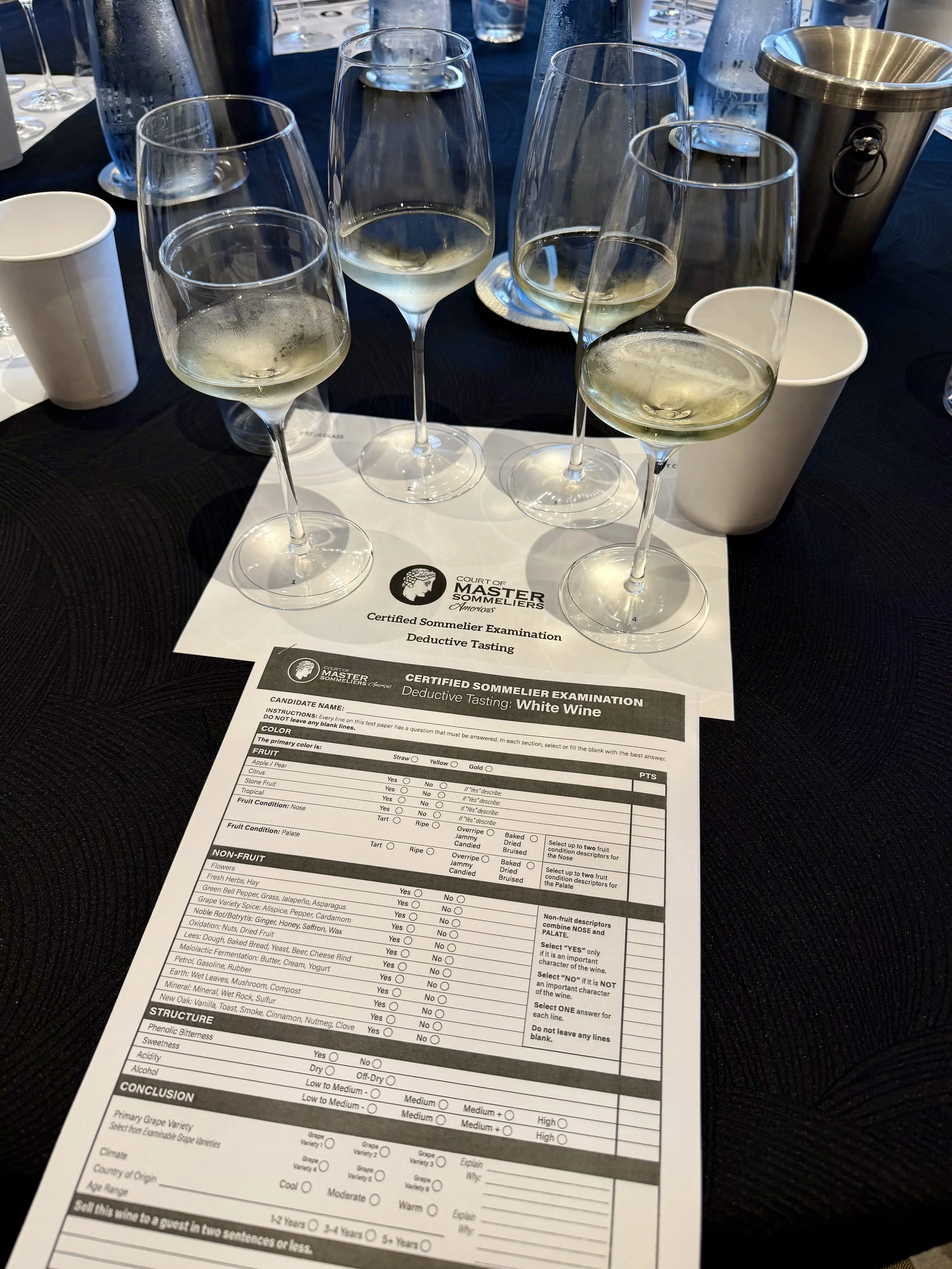
At the Certified level specifically, the testable list comes to 20 grape varieties total: 8 white and 12 red, each tied to specific countries and regions you’re expected to know cold. Whites cover Albariño, Chardonnay, Chenin Blanc, Gewürztraminer, Pinot Grigio, Riesling, Sauvignon Blanc, and Torrontés. Reds cover Cabernet Franc, Cabernet Sauvignon, Gamay, Grenache, Malbec, Merlot, Nebbiolo, Pinot Noir, Sangiovese, Syrah, Tempranillo, and Zinfandel. CMS publishes the full grape and region breakdown directly, and it’s worth memorizing before you sit down to taste.
My big takeaways
Let the wine talk to you. This is a conversation, not an interrogation. You’re not yelling questions at the glass and demanding answers. You give it time to give up its qualities, its aromas, its structure, and on exam day you’ll actually have enough time to let that happen if you don’t rush it.
Drink and taste everything. Everyone has flavors they don’t love. You’ll clock those instantly, and that’s useful information, not a weakness. Same goes the other direction. I can spot Gewürztraminer or Syrah from across the room at this point, and that kind of instant recognition only comes from tasting broadly and often.
Tasting is a game. It should be fun, even when it’s frustrating. On exam day, ruling wines out is often faster than trying to nail the answer directly. And here’s the part that actually took pressure off me: you can get the varietal and region completely wrong and still pass, as long as you correctly identify the structure, the fruit, and the non fruit characteristics. The grid rewards the process, not just the final guess.
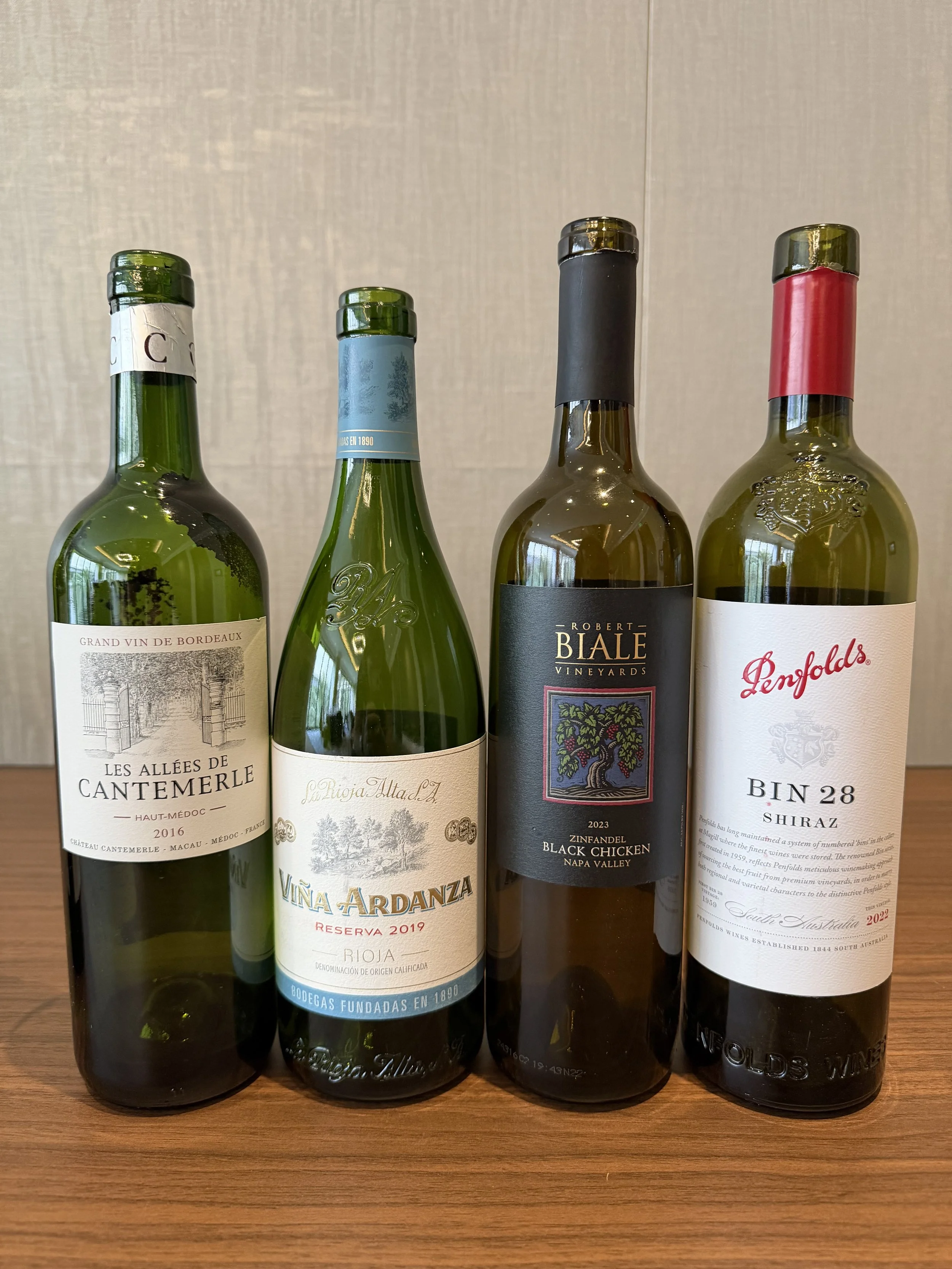
A small sneak peak of the red wines we tasted. The Biale Zinfandel was a standout favorite.
Structure is the key to ID. Tannin, color, clarity, alcohol, sweetness. That’s where the real identification work happens. This is the takeaway I lean on hardest, especially tasting in a group where the power of suggestion kicks in the second someone confidently names a fruit. I’ve learned to trust structure over the loudest voice at the table.
Impact compounds start making sense once you know why they’re there. Pyrazines, the green bell pepper and jalapeño notes, click immediately once you understand the chemistry behind them. Same with terpenes in Gewürztraminer. I can pick out TDN in Riesling quickly now, though I’ll admit I’m less sensitive to it than I used to be since I drink so much Riesling these days. I’m planning to go deeper on this with Chartier’s Taste Buds and Molecules.
And the line that got the biggest laugh out of the whole room, from one of the Master Sommeliers: “Terroir is just unripe grapes.”
