
The Generation That Chose Bubbles
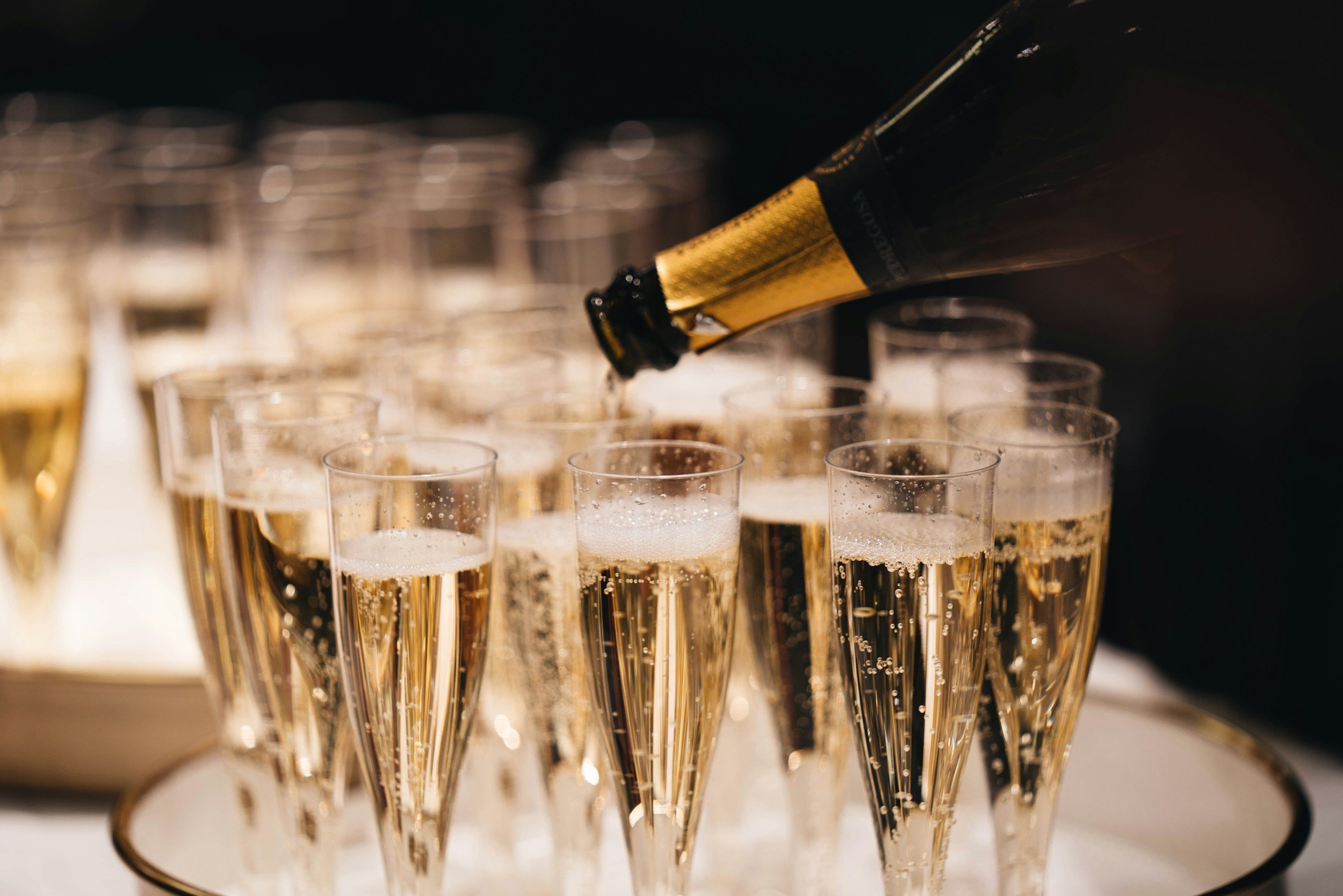
I was halfway through mowing my lawn, thinking about a crisp glass of Raventós i Blanc, listening to the VinePair podcast, when the hosts said something that stopped me. New data from the International Wine and Spirit Research firm (IWSR) just showed that Gen Z is drinking almost as much as everyone else. The narrative that this generation gave up alcohol and took the whole business down with it is dead. Turns out it's Boomers pulling back now.
I've been hearing and reading the opposite version of this story on a loop. Wine is dying. Young people don't drink it. Tequila and ready-to-drink (RTD) cocktails are eating our lunch. I wanted to know more, and once I started pulling and digesting the numbers I realized there was enough here for two posts. This one is the story. The companion piece gets into the actual mechanics of sparkling wine.
Gen Z Isn't Quitting
IWSR's Bevtrac survey, which tracks drinking behavior across major markets twice a year, put Gen Z's drinking rate at 74%. That's up from 66% three years ago, and it's basically even with the overall adult rate of 76%. Boomers dropped to 71%, the lowest of any generation tracked. Millennials are still drinking the most of anyone, at 81%.
IWSR president Marten Lodewijks didn't hedge about it. He said the idea that Gen Z is the generation of moderation is now conclusively debunked, and half-joked that the title might belong to Boomers instead.
Here's the nuance: showing up isn't the same as showing up the same way. Gen Z reaches for cocktails more than any other generation, drinks in bigger groups, and actually pays attention when the government (or perhaps savvy marketing) puts out health guidance on alcohol.
Wine has its own version of this story. The Wine Market Council's (WMC) 2025 Benchmark Consumer Survey found Millennials have overtaken Boomers as the largest wine drinking generation in the country, 31% of the market to 26%, down from a 32% Boomer share two years ago. Gen Z nearly doubled its share too, from 9% to 14%. Both younger groups reach for sparkling more than Boomers ever did.
The Sparkling Numbers
I'd had this stat rattling around from an earlier conversation and wanted to nail it down before building a post around it. Sparkling has been one of the more resilient categories in wine, holding up even as overall wine sales slip. A separate IWSR report focused specifically on sparkling wine found U.S. participation in the category climbed to 27% of the legal drinking age (LDA) population in 2025. That's up from 21% back in 2019.
What got me wasn't just the numbers moving. It's how they moved. Younger LDA drinkers, Gen Z especially, are pulling sparkling wine away from red and white for the most unglamorous occasions imaginable. Nobody's saving these bottles for an anniversary anymore. It's just what's cold in the fridge on a random Tuesday. Why is that?
The Health Halo
Sparkling wine gets to borrow a look it didn't build. Hard seltzer spent the better part of a decade training people to associate bubbles with something "light" and "clean." It gets the skinny can and bright labels.
Whether that halo is even real is its own debate. A 2025 study in the Journal of Consumer Affairs tested this exact question for hard seltzer and found little evidence of an actual health halo effect. What drove the category's growth was taste and drinkability, not a perceived health benefit. That doesn't kill the theory here so much as complicate it. Sparkling wine might be borrowing the visual language of "light and clean" without borrowing an effect that was ever fully proven in the first place.
The WMC numbers still tell part of the story. In the past year, 24% of Gen Z and 21% of Millennials changed the type or amount of alcohol they drink specifically to improve mood, sleep, or energy, versus just 11% of Gen X and 5% of Boomers. Nobody handed out a peer-reviewed study to make that decision. IWSR found something similar on the broader alcohol side too: Gen Z is the generation most likely to actually follow government health guidance.
My Take
Is the healthy reputation fair? Sort of, and apparently more assumed than proven. Sparkling usually does run lower alcohol by volume (ABV) than a big Cab or a fortified red, so that part checks out. But sparkling wine isn't seltzer. It has yeast character and a real production method behind it, the kind of complexity a can of flavored fizz will struggle to compete with.
WMC's data says wine overall is becoming more of a special occasion drink for younger generations, something people reach for specifically to make a moment bigger. IWSR's sparkling data says the opposite is happening inside that one category. It's sliding out of the special occasion box and into daily life.
The Honest Caveat
The sugar and additive myths around wine aren't going anywhere on their own. I already took a swing at one of the biggest myself, the sulfite headache myth, and the amount of misinformation floating around a compound that occurs naturally in every wine ever made is still baffling to me.
WMC's own research director said it plainly, too. Liz Thach put it this way: a lot of consumers still believe wine carries high sugar or unnecessary additives, and the industry needs real transparency to fix that. (Liz Thach, if you're reading this, your textbooks have been assigned in every single class I've taken so far at CIA. At this point I feel like I owe you a glass of something.)
If you want the deeper dive on what's actually in the bottle, I broke down the real ABV and sugar numbers behind sparkling wine in a fun companion guide. Go read that one next.
Facts & References
IWSR Bevtrac Survey, July 2026. Gen Z's global drinking rate climbed to 74%, up from 66% three years ago, nearly matching the overall adult rate of 76%. Boomers dropped to 71%, the lowest of any generation.
Wine Market Council, 2025 U.S. Wine Consumer Benchmark Segmentation Survey. Millennials now 31% of U.S. wine drinkers, Boomers down to 26% from 32% in 2023. Gen Z's share grew from 9% to 14%.
IWSR Sparkling Wine Landscape Report, U.S., November 2025. U.S. sparkling wine participation rebounded to 27% of the LDA population in 2025, up from 21% in 2019, driven by younger drinkers moving the category into casual, everyday occasions.
WMC survey findings. 24% of Gen Z and 21% of Millennials changed their drinking habits in the past year to improve mood, sleep, or energy, compared to 11% of Gen X and 5% of Boomers.
Staples, Malone, Ellison & Caputo, "Health Halos or Drinkability? Evaluating What Is Behind Hard Seltzer's Meteoric Growth," Journal of Consumer Affairs, 2025. Found little evidence of a genuine health halo effect for hard seltzer, with perceived taste and drinkability explaining most of the category's growth instead.
