
All Bubbles Are Not Created Equal
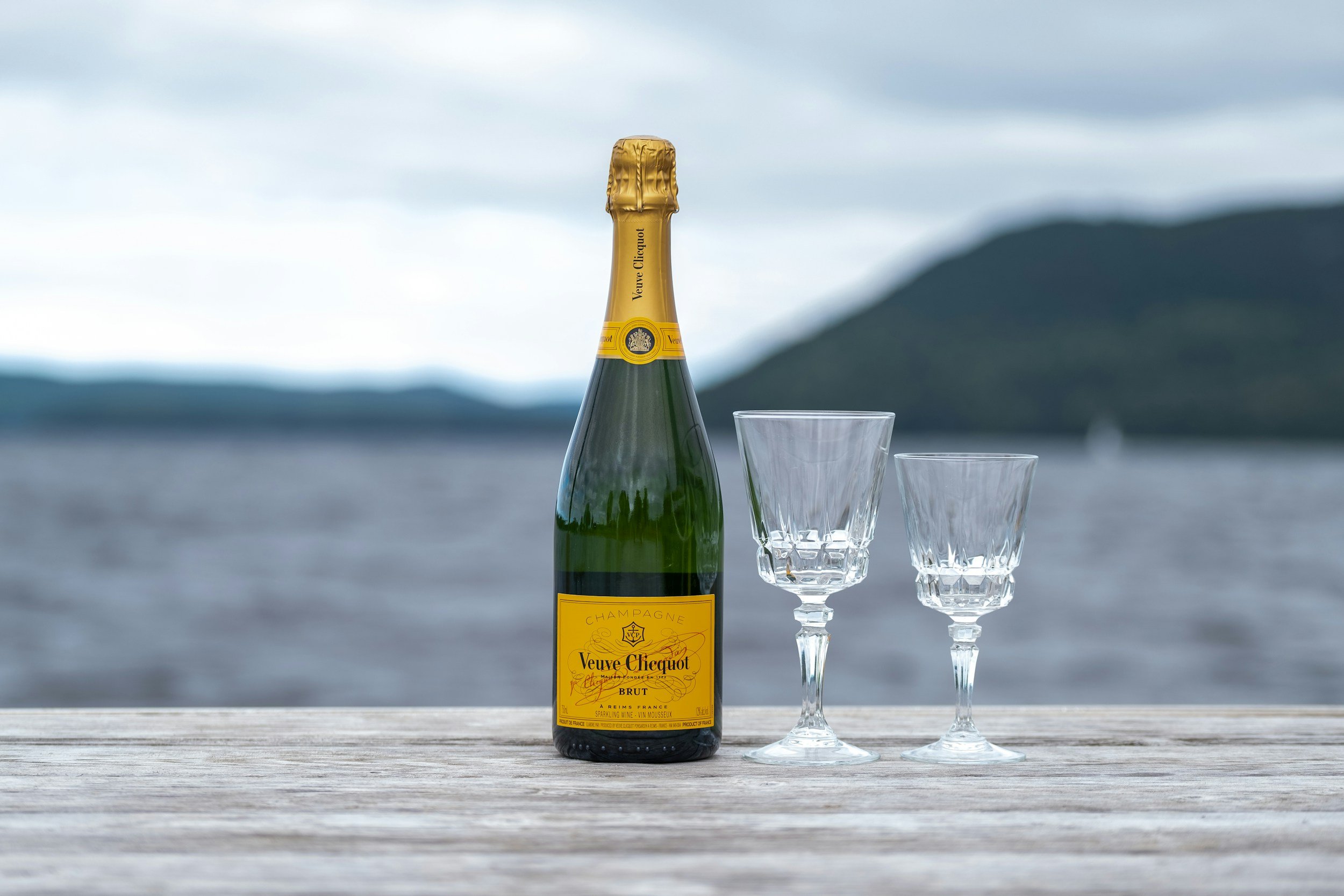
Gen Z is drinking sparkling wine. Not just champagne on New Year's Eve. It is all day and any occasion. Domestic sparkling sales are up more than 30 percent this year, and champagne has quietly gone from a special-occasion splurge to an everyday pour. If that's you, you deserve a real map of what you're actually choosing between. If you're not Gen Z, you deserve the same map. Most people can name Champagne, maybe Prosecco, and stop there. That's like knowing whiskey only as Jack Daniel's.
I have personal reasons to care about this right now, too. I got engaged this summer, so corks have been popping around here more than usual. I am calling it my sparkling summer. This is the field guide I wish I'd had before all of it. I'll cover how sparkling wine actually gets made, which styles are worth your money, and why "bubbles" is doing a lot more work as a category than most people realize.
The Methods
Every sparkling wine starts as a still wine. What happens next determines almost everything about what ends up in your glass: how fine the bubbles are, how long they last, whether you're tasting bright fruit or toasted bread, and how much the bottle costs.
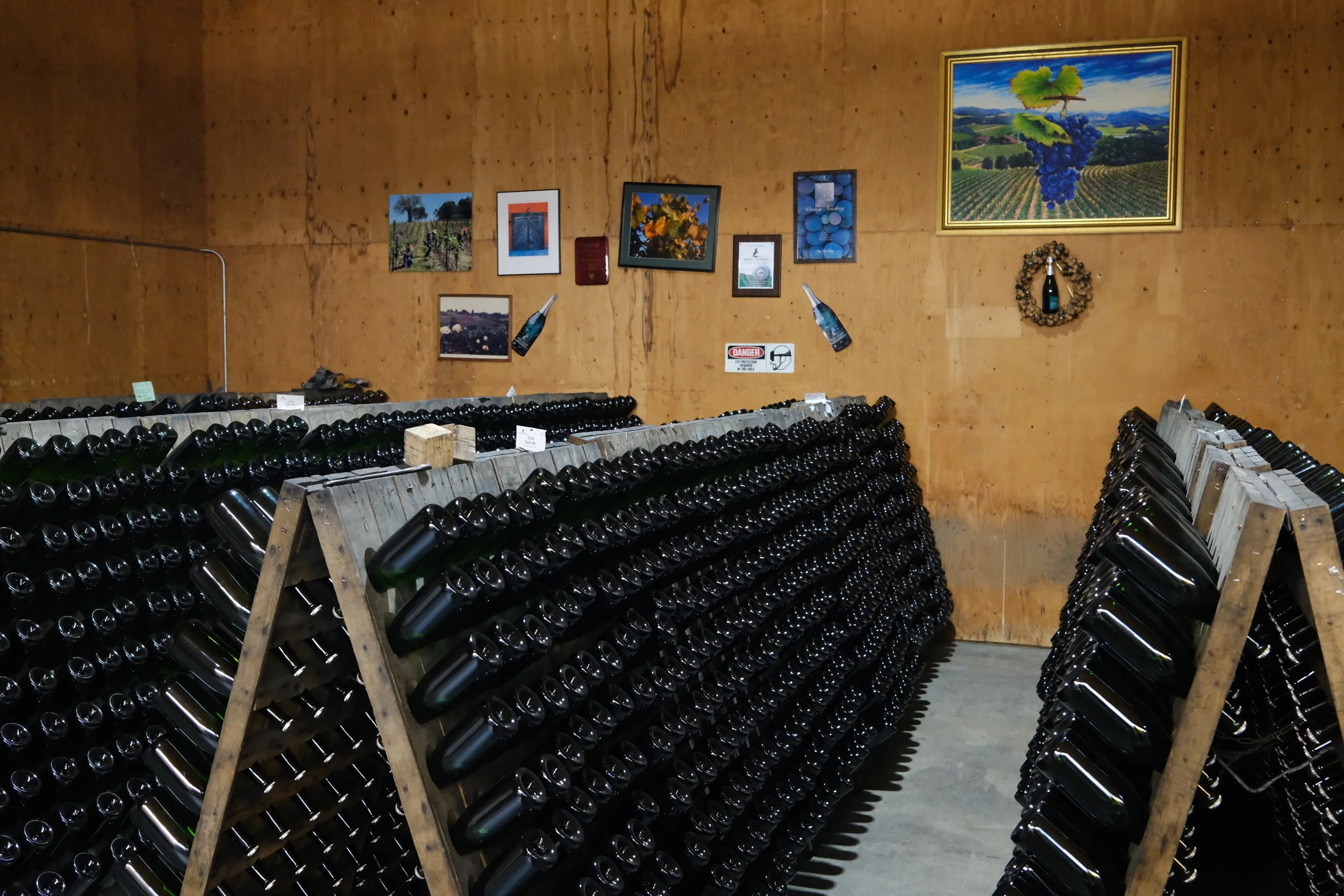
Riddling racks at Iron Horse Vineyards in Russian River Valley.
Traditional method (also called the champagne method) puts the second fermentation inside the bottle you eventually drink from. Winemakers add a little sugar and yeast to a finished still wine, cap it, and that second fermentation traps the CO2 right there in the bottle. It's also why traditional method wines pick up that toasty, bready character: the wine sits on its spent yeast (the lees) for months or years before it's disgorged. Champagne, Crémant, Cava, and Franciacorta all use this method.
Tank method, or Charmat, moves that second fermentation into a large pressurized tank instead of individual bottles. The wine ferments, builds pressure, and gets bottled under that pressure all at once. It's faster, cheaper, and it keeps the wine's fresh fruit character front and center. This is Prosecco's default method, and it's why Prosecco tastes like fruit instead of toast.
Ancestral method, better known as Pet-Nat (Pétillant Naturel), is the oldest technique of the three and the simplest. There's only one fermentation. The wine gets bottled before that first fermentation finishes, so it keeps fermenting in the bottle, and this traps its own CO2 along the way. The is no disgorgement or dosage, and it's often a bit cloudy. It's the wildcard of the group for a reason, but often a fun adventure!
Transfer method starts like traditional method, with a second fermentation in the bottle, but skips the labor-intensive riddling and disgorging process. Instead, the wine gets dumped into a pressurized tank, filtered, dosed, and rebottled. You get traditional method's texture without the hand labor. It is much more common in the US and England than in Europe.
The Styles
Champagne is the benchmark. It's a protected name, a specific region in France, and traditional method is mandatory, with a legal minimum of 15 months total bottle aging for non-vintage wine and three years on the lees for vintage. Most houses go well past those minimums. My own preference runs toward wines with real yeast character and some age on them, either a bready and developed Brut or a Blanc de Noirs with some weight to it. If you want to go deeper, look for grower champagne, marked RM on the label, which means the same family that farmed the grapes also made the wine.
Crémant is the smart buy in this category. Same traditional method as champagne, made everywhere in France outside the Champagne region: Loire, Jura, Limoux, Alsace, and above all Bourgogne. Crémant de Bourgogne leans on Chardonnay and Pinot Noir, the same grapes as champagne itself, while Crémant d'Alsace works with Pinot Blanc, Riesling, and Pinot Gris for something a little more aromatic. Both are producing genuinely serious wine right now, often for a third of what a comparable champagne costs.
Prosecco is the crowd pleaser, made from Glera in Italy's Veneto and Friuli via tank method. It gets dismissed as simple, and the bottom shelf earns that reputation. Look for the DOCG designation, specifically Conegliano Valdobbiadene, and you're in a different category entirely.
Cava is the most underrated wine on this list. Traditional method, mostly from Penedes in Spain. It is comprised of native grapes like Xarel-lo, Macabeu, and Parellada, and criminally cheap for the quality in the bottle. Raventós i Blanc is the producer that made me a believer. They took quality so seriously that in 2012 they left the Cava DO entirely and created their own designation, Conca del Riu Anoia, just to hold their biodynamic, terroir-driven wines to a stricter standard than Cava law required.
Pet-Nat is the wildcard, as covered above. Low intervention, often a little funky, always interesting. Not every bottle works, but the good ones are some of the most honest wine you'll drink. Go to your local wine or bottle shop to give this a try, but maybe try a glass first!
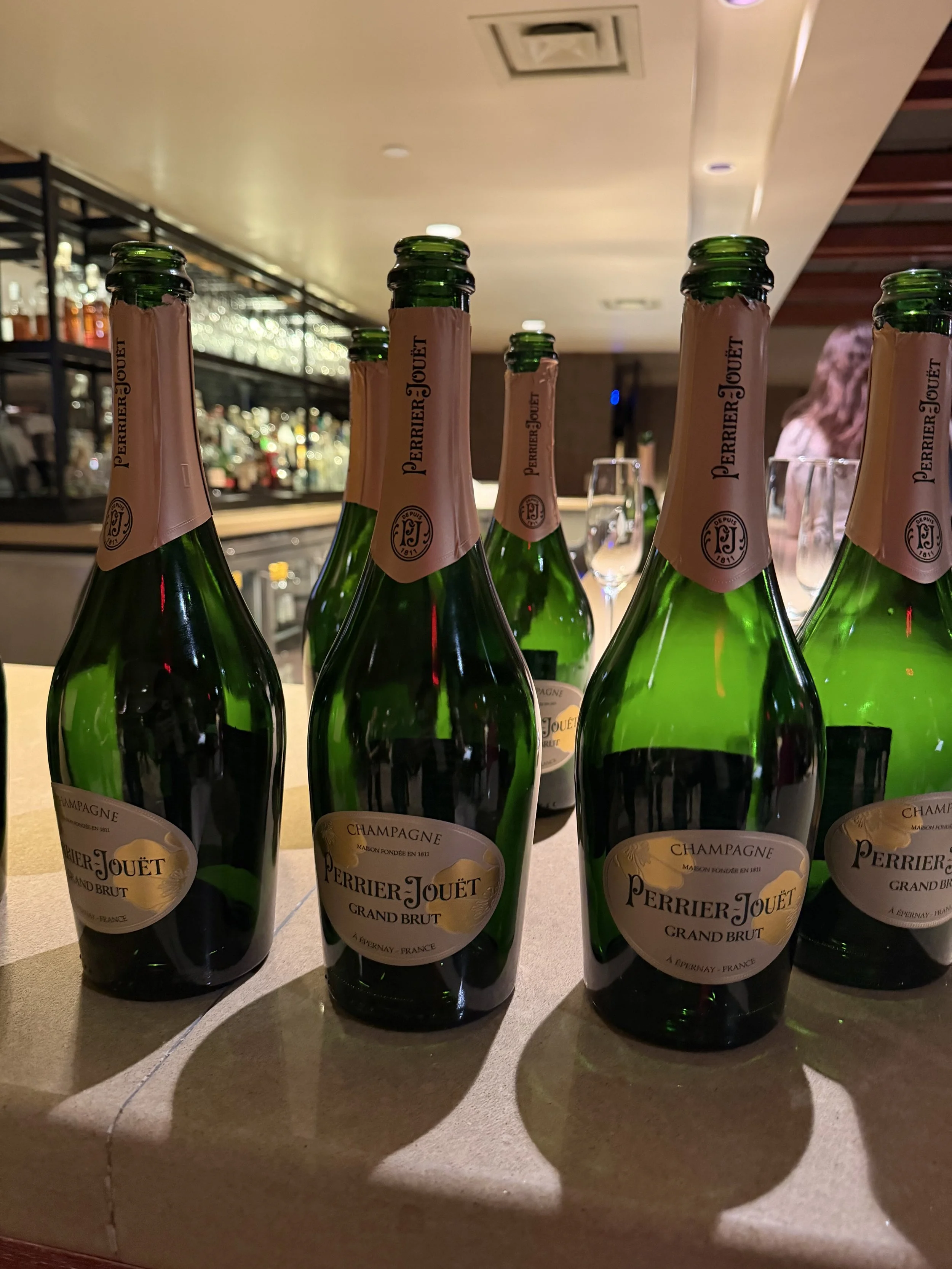
Sparkling Rose isn't its own method. It's a color and a style that can happen inside any of the methods above, either by blending in a little red wine or by giving the juice skin contact. My favorite bottle in this category came from my intro sommelier course celebration: Perrier-Jouët Grand Brut. They brought the good stuff that day, and I haven't forgotten it!
American Bubbly
Buying American deserves its own section, because the misconception that great sparkling only comes from Europe is exactly the kind of thing this field guide exists to correct. Domaine Carneros is my top pick for higher-end American sparkling, the Napa estate the Taittinger family built specifically to make traditional method wine in Carneros. I always keep a bottle of Le Rêve on hand, Domaine Carneros's top cuvee and a vintage Blanc de Blancs that's consistently been named America's best sparkling more than once.
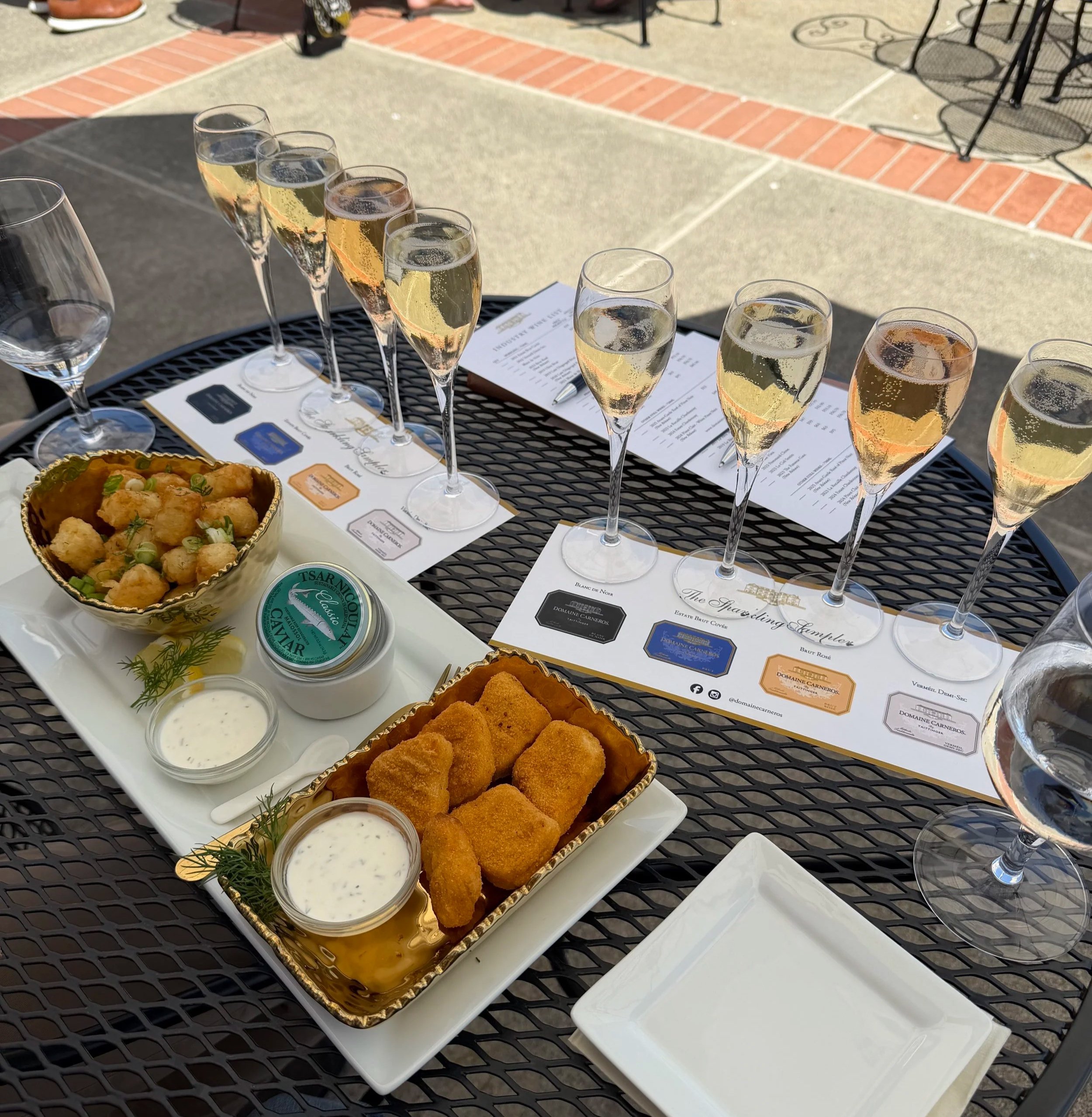
Domaine Carneros and an iconic pairing of chicken nuggets, caviar, and tater tots.
I've become a full convert to Iron Horse too, especially after a site visit with the CIA that included time with one of the co-owners. Iron Horse has been poured at the White House across seven consecutive presidential administrations. That's a story I still owe you in full, so consider this the preview.
Beyond Napa and Sonoma, King Estate in Oregon is making a traditional method Brut Cuvee. It is biodynamically farmed and aged three years on the lees, that punches well above its ~$25 price tag. And for the Texas crowd: Heath Sparkling Wines in Fredericksburg is the first all-sparkling winery in the state, built entirely around traditional method production. Rebecca Caroline recently opened as the new Texas-grown traditional method project from William Chris Wine Company with a tasting room in Hye's old post office. I am hoping to send you a postcard from there this weekend!
ABV and Sugar Reality Check
Here's where the "sparkling is the healthy choice" idea gets complicated: dosage.
After disgorgement, winemakers top off every bottle with a small dose of wine and sugar, called dosage, to balance the wine's naturally high acidity. How much sugar goes in determines the label you see, and those labels cover a much wider range than most people assume.
Brut Nature has under 3 grams of sugar per liter. Extra Brut runs 0 to 6 grams. Brut, the category most people default to, allows up to 12 grams per liter. Extra Dry, confusingly, is actually sweeter than Brut at 12 to 17 grams. Sec climbs to 17 to 32 grams. Demi-Sec tops out at 32 to 50 grams per liter, which is approaching dessert wine territory.
Sparkling wine isn't automatically lower in sugar than a glass of still wine. A dry still red or white typically finishes with close to zero residual sugar. A Demi-Sec sparkling can carry 50 grams of sugar per liter and still be sold right next to a bone-dry Brut on the same shelf, both labeled "Champagne." Extra Dry sits in the same trap: the name suggests less sugar than Brut, and it's actually more.
On the alcohol side, sparkling wine usually runs lighter, around 11 to 12.5 percent ABV compared to a still wine average closer to 12.5 to 14.5 percent. But that gap is smaller than people expect, and bubbles make wine dangerously easy to drink quickly. Combine a mimosa-friendly ABV with a format built for refills, and the lighter number on the label stops mattering fast (especially if you have something to celebrate).
Fun Facts
A few things worth knowing for your next dinner party.
The pressure inside a champagne bottle runs around 90 psi. Your car tire holds about 30 psi. That means a champagne bottle carries roughly three times the pressure of your tire, which is also why the glass is thick and the cork is wired down. Watch where you aim that cork!
Champagne flutes are actually bad for tasting the wine. The narrow bowl was designed to keep bubbles rising in a pretty column and slow their escape, not to let the wine's aromas open up. It doesn't give your nose room to get in, and it funnels the wine down a narrow strip of your tongue instead of across your whole palate. More sommeliers are pouring champagne into a tulip-shaped white wine glass instead.
Riddling, or remuage, is the process of rotating each bottle in small increments while gradually tilting it neck-down, so the dead yeast sediment slides into the neck instead of staying spread through the bottle. The end position is called sur pointe, bottle standing fully upside down, ready for disgorgement. A skilled riddler can work through thousands of bottles a day, an eighth of a turn at a time. Most producers now use a machine called a gyropalette, a crate that holds hundreds of bottles at once and turns them all automatically, doing the same job in days instead of weeks.
Blanc de Blancs means white wine from white grapes and is almost always 100 percent Chardonnay, and it tends to run lighter, leaner, and more citrus-driven. Blanc de Noirs means white wine from black grapes, usually Pinot Noir and Pinot Meunier, pressed off the skins fast enough that no color transfers into the juice. It tends to carry more body and red fruit depth. Both pour equally pale in the glass, because the color in a grape lives in the skin, not the juice inside it. If a wine is dark pink or salmon-colored, that's a rosé!
Closing
That's the down and dirty map of four methods, eight styles, and some sugar fun facts to make you dangerous at your next tasting. The personal side of this, the engagement, the sparkling summer, and that Iron Horse story I keep promising, is where the Foundations pillar hands off to the Journal. Head over there to read more about the growing sparkling industry and what it means across different generations.
Books Worth Owning
If you want to go deeper than a blog post can take you, these five are well worth the shelf space:
Sparkling Wine for Modern Times by Zachary Sussman, perfect for the average consumer
Drink More Fizz! by Jonathan Ray, excellent compendium of over 100 bottles
But First, Champagne by David White, thoroughly researched and complete
Champagne by Peter Liem, the boxed book and map set, worth it for the maps alone
The Widow Clicquot by Tilar J. Mazzeo, the biography of THAT Veuve Clicquot
