
Understanding Texas Hill Country Wine
Texas Hill Country was one of the first places where wine started to feel connected to a place for me.
Before that, wine mostly felt like something you picked off a shelf. Labels, regions, maybe a grape or two if you recognized it. Spending time in the Hill Country changed that. It made wine feel tied to the land in a way that was easier to see, partly because the land itself is so hard to ignore.
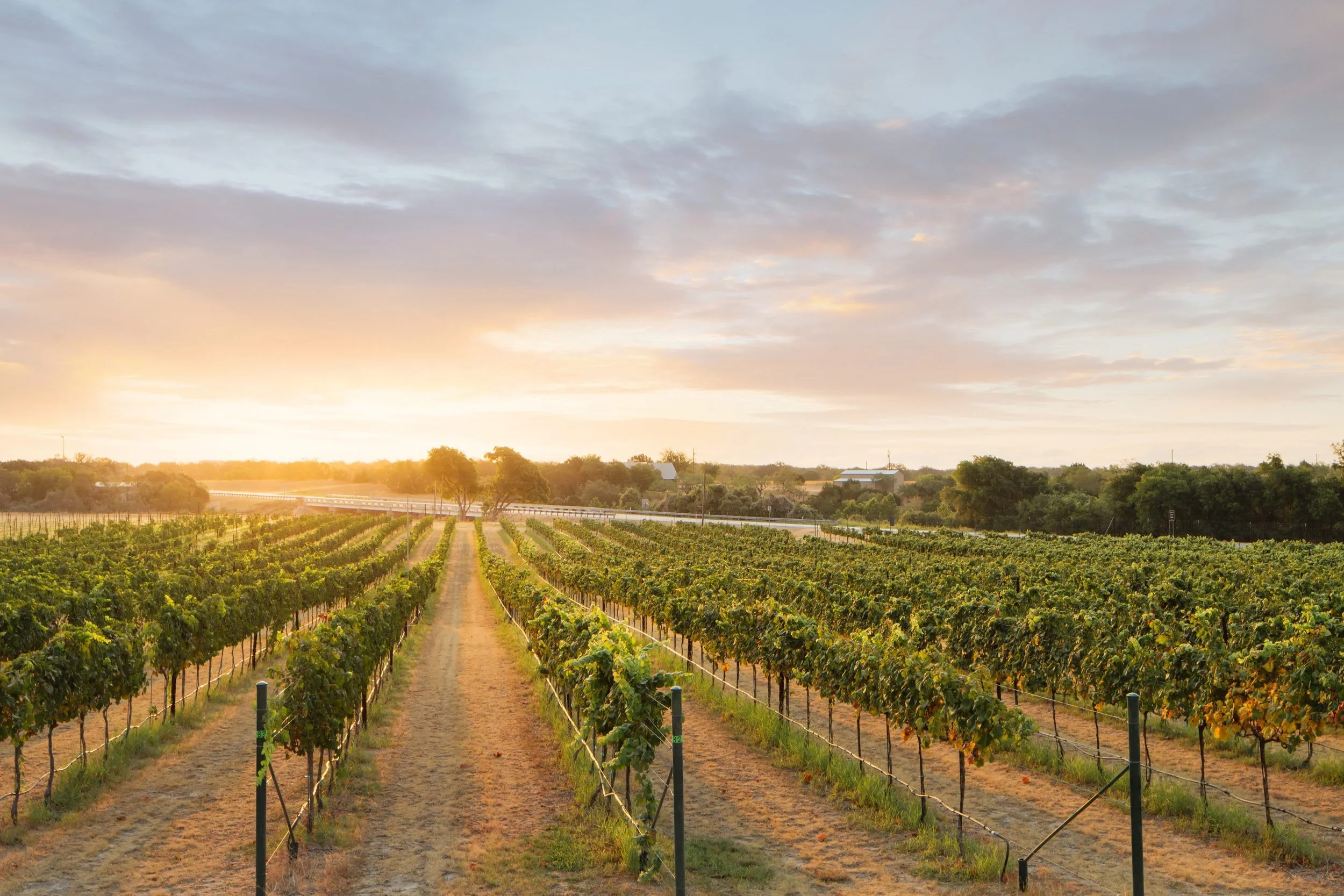
Photo by Invention Vineyards in Fredericksburg.
The Region
The Texas Hill Country AVA is the third largest in the United States, which tells you something important before you even look at a map. You are not dealing with one tightly defined environment. You are dealing with a wide sweep of terrain across the Edwards Plateau, covering millions of acres of rolling hills, river valleys, granite outcroppings, and limestone shelves. That scale means variation is baked into the region from the start.
Fredericksburg is the center of gravity. Most of the major producers are within a reasonable drive of it, and the town itself has built an entire identity around wine tourism. The Fredericksburg Wine Road 290 runs east toward Austin and is one of the more concentrated stretches of tasting rooms in the state. If you are doing the Hill Country for the first time, that corridor is the logical starting point.
But the region is bigger than that stretch of highway, and understanding it means understanding what is underneath it.
Soil and Geology
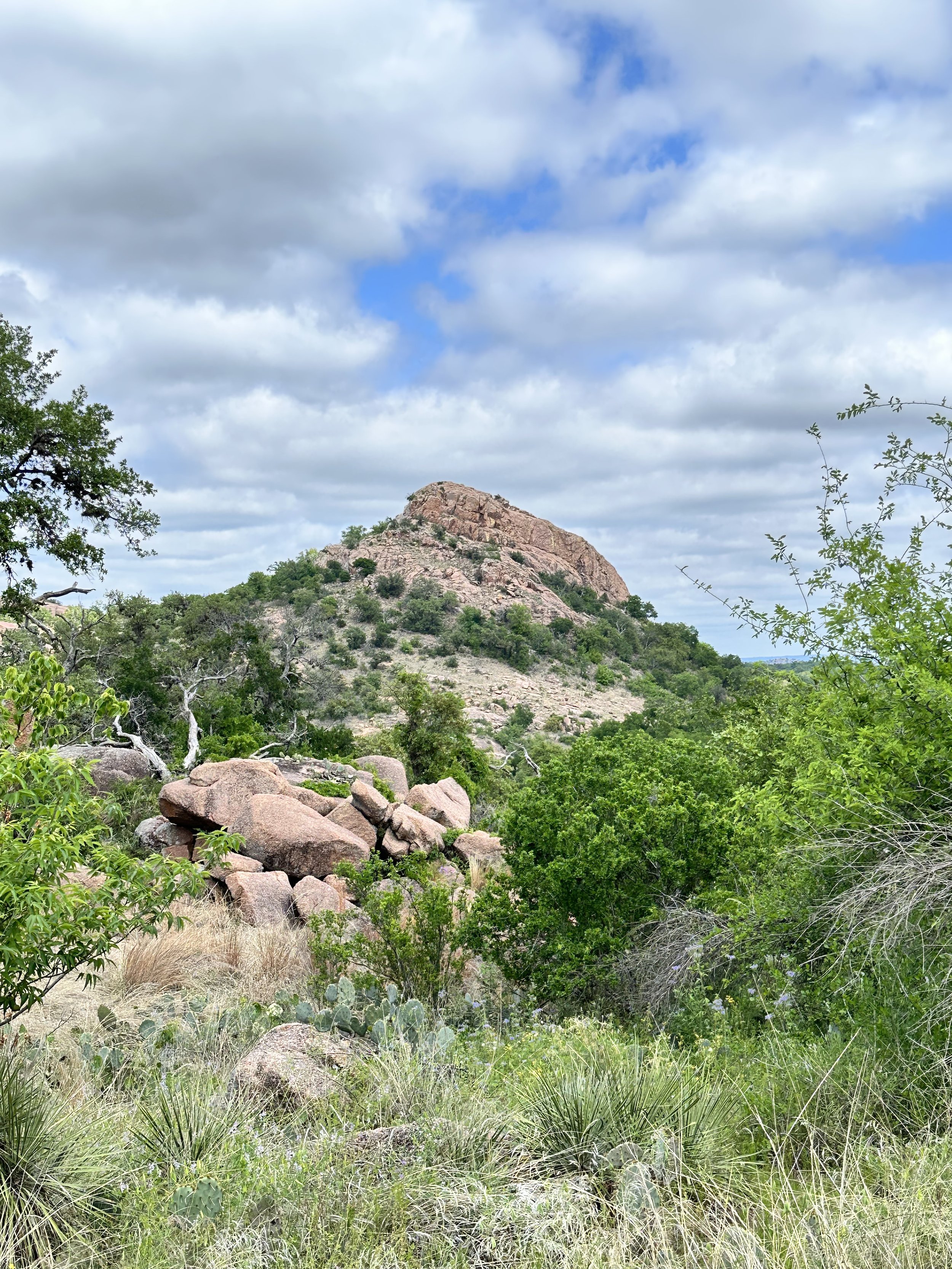
Enchanted Rock in the Northern Hill Country.
The Hill Country sits on ancient geology. Granite, limestone, and sandy loam all show up depending on where you are standing, and those differences matter. Granite-based soils drain well and force vines to work for water, which tends to concentrate flavor. Limestone contributes minerality and structure. The variation across the region means that two wineries thirty miles apart can be working with fundamentally different ground, which is part of why it is hard to define a single Hill Country style.
That variability is a challenge for producers trying to build a consistent regional identity, but it is also what makes the area geologically interesting. The Edwards Plateau is one of the more distinctive wine-growing environments in the country once you start paying attention to what is underneath the surface.
The Climate Problem and How Producers Are Solving It
The climate is the defining challenge here and the thing that shapes every decision in the vineyard.
It is hot. Summers are long, rainfall is unpredictable, and the heat during the growing season pushes sugar levels fast. Maintaining balance between ripeness and acidity is genuinely difficult in a way that cooler regions do not have to think about as much. Drought is not an occasional problem. It is a baseline condition that producers plan around every year.
Elevation and nighttime cooling help. Much of the Hill Country sits between 1,500 and 2,000 feet, which moderates what would otherwise be an unworkable climate. The diurnal temperature swing between day and night gives grapes a chance to retain some of the acidity that the daytime heat strips away. It is not a perfect solution, but it is enough to make quality wine possible.
Grape selection reflects this reality directly. Tempranillo, Mourvèdre, Grenache, Viognier, and Albariño are increasingly common because they come from climates that prepared them for heat. Cabernet Sauvignon still shows up, and in good vintages from well-sited vineyards it can be impressive, but the varieties that originated in Spain and the southern Rhône have a natural advantage here. The more forward-thinking producers have been leaning into that for years.
Water rights are also part of this story in a way that does not always come up in wine conversations. Texas water law is complicated, and access to irrigation water is not guaranteed for everyone growing grapes in this region. That reality shapes where vineyards get planted and how they are managed in ways that have no equivalent in most European wine regions.
The High Plains Question
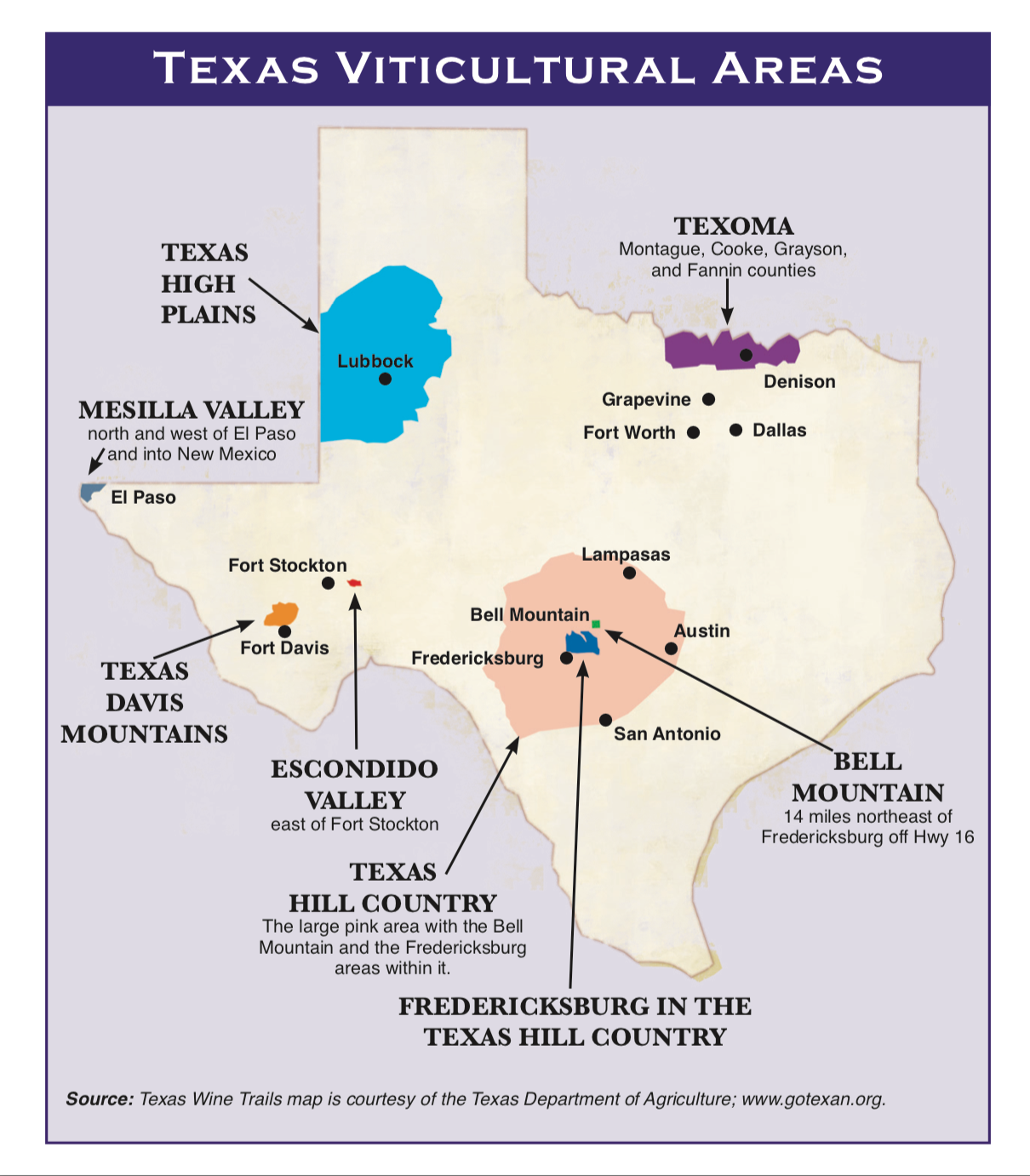
One of the more important things to understand about Texas wine is that the Hill Country and the Texas wine industry are not the same thing.
A significant portion of the grapes used in wines labeled simply as "Texas" are actually grown in the High Plains AVA, centered around Lubbock in the Panhandle. The elevation there, sitting above 3,000 feet, and the drier, more continental climate create more stable growing conditions than the Hill Country. The diurnal temperature swings are more pronounced, disease pressure is lower, and the plateau environment is genuinely well suited to viticulture in ways that have attracted serious growers.
Many Hill Country producers source fruit from the High Plains because the growing conditions are more reliable. That is not a criticism. It is an honest adaptation to geography. But it does mean that when you are reading a Texas wine label, it is worth looking at whether it says "Texas Hill Country" specifically or just "Texas." The distinction tells you something about where the fruit actually came from and the conditions behind it.
Producers Worth Knowing
William Chris Vineyards has become one of the more important names in the conversation around what Texas wine can be at its best. Their commitment to Texas-grown fruit is genuine and the wines reflect it. The estate Tannat is the one to seek out. It is a variety originally from southwest France that has found a surprisingly natural home in Texas Hill Country conditions, producing a wine with real structure and depth that makes a quiet argument for what this region is capable of when the variety and the place are well matched. You’ll understand why they are the most awarded winery in Texas when you visit.
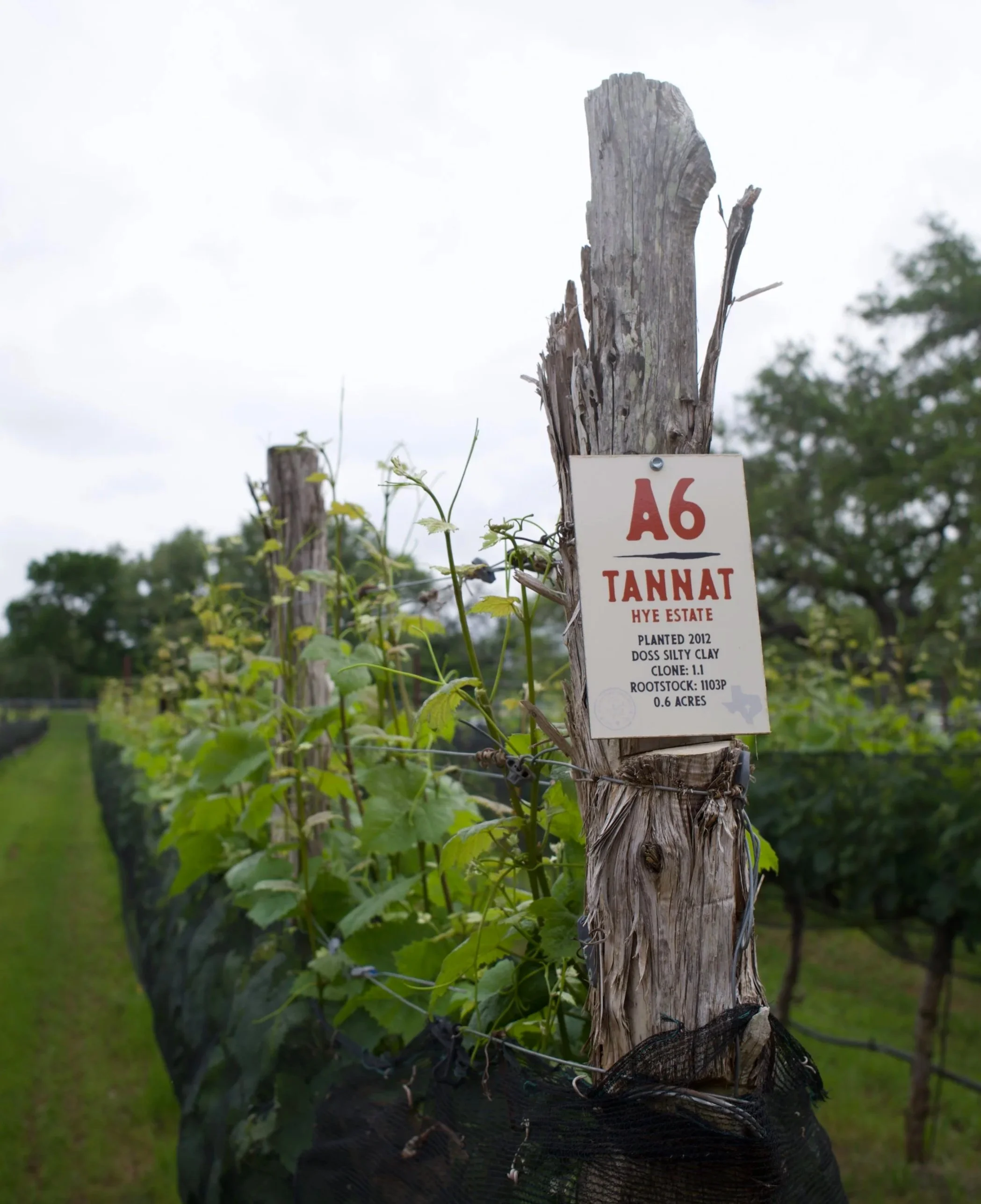
Tannat vine at William Chris Vineyards.
Pedernales Cellars has built its program around Spanish and Rhône varieties, which is exactly the right instinct for this climate. Their Tempranillo is one of the most consistent expressions in the Hill Country and a useful reference point for understanding what that grape can do in Texas conditions. Worth trying early in any exploration of the region.
Becker Vineyards has been part of the Hill Country story long enough to have some perspective on it. The Lavender Hill estate near Stonewall is one of the more picturesque properties in the region, and the Reserve Cabernet Sauvignon shows what patience and site selection can produce even in a warm climate. A good benchmark for the region's established side.
Michael Ros is a producer worth knowing if you want to see where the next chapter of Texas wine is being written. The Grenache is the wine that keeps me coming back. If I am being direct about it, it is my favorite wine coming out of the Hill Country right now. It has the kind of balance and sense of place that makes you stop and pay attention, which is exactly what good regional wine is supposed to do. Seek it out!
Siboney Cellars is one of the more interesting stories in the Hill Country right now. Their relatively new plantings of Bordeaux varieties, including Merlot, are still finding their footing, which makes this an early look at something worth watching. Bordeaux varieties in a Texas climate is not an obvious bet, but site selection and vineyard management can do a lot in this region, and what Siboney is attempting is the kind of honest experimentation that defines where the Hill Country is headed. The winery expresses a Cuban influence from the owner, and there’s no better place to have a Cuban sandwich. Be sure to visit on a Thursday or Friday. This are the only days it is offered!
Texas Hill Country Quick Facts
The Texas Hill Country AVA was established in 1991
It is the third largest AVA in the United States by size
Elevation ranges from roughly 800 to over 2,000 feet across the region
The climate is hot with long growing seasons, drought pressure, and meaningful vintage variation
Geology includes granite, limestone, and sandy loam depending on location
Much of the grape growing for wines labeled simply "Texas" occurs in the High Plains AVA near Lubbock
Fredericksburg and the Wine Road 290 corridor are the commercial and tourism hub of the region
Why It Is Worth Paying Attention
Compared to Napa or Sonoma, Texas Hill Country feels less defined, and that is probably the most honest thing you can say about it. The region is still working out what it wants to be. There is more variation, more experimentation, and more visible trial and error than you find in places with a longer track record.
That can make it less predictable. It can also make it more interesting.
What I keep coming back to is that the Hill Country does not have the luxury of coasting on reputation. Every producer is making a genuine argument for why their wine is worth your attention, and the best of them are doing it by paying close attention to what the land is asking for rather than what the market expects. That is a good sign for where the region is headed.
It is not trying to be somewhere else. It is a place with its own challenges and its own identity, and if you spend enough time with it, that starts to come through.
Learn More & Resources
William Chris Vineyards — williamchriswines.com
Pedernales Cellars — pedernalescellars.com
Becker Vineyards — beckervineyards.com
Michael Ros — michaelroswinery.com
Siboney Cellars — siboneyestatewines.com
Texas Wine Growers — txwinegrowers.com
Texas Hill Country Wineries — texaswinetrail.com
