
What Would Bourdain Drink?
Today is Bourdain Day. June 25 was his birthday.
His friends Eric Ripert and José Andrés made it official in 2019, and now the idea is to eat somewhere new, try something you haven't tried, maybe pick up a copy of Kitchen Confidential if you haven't already.
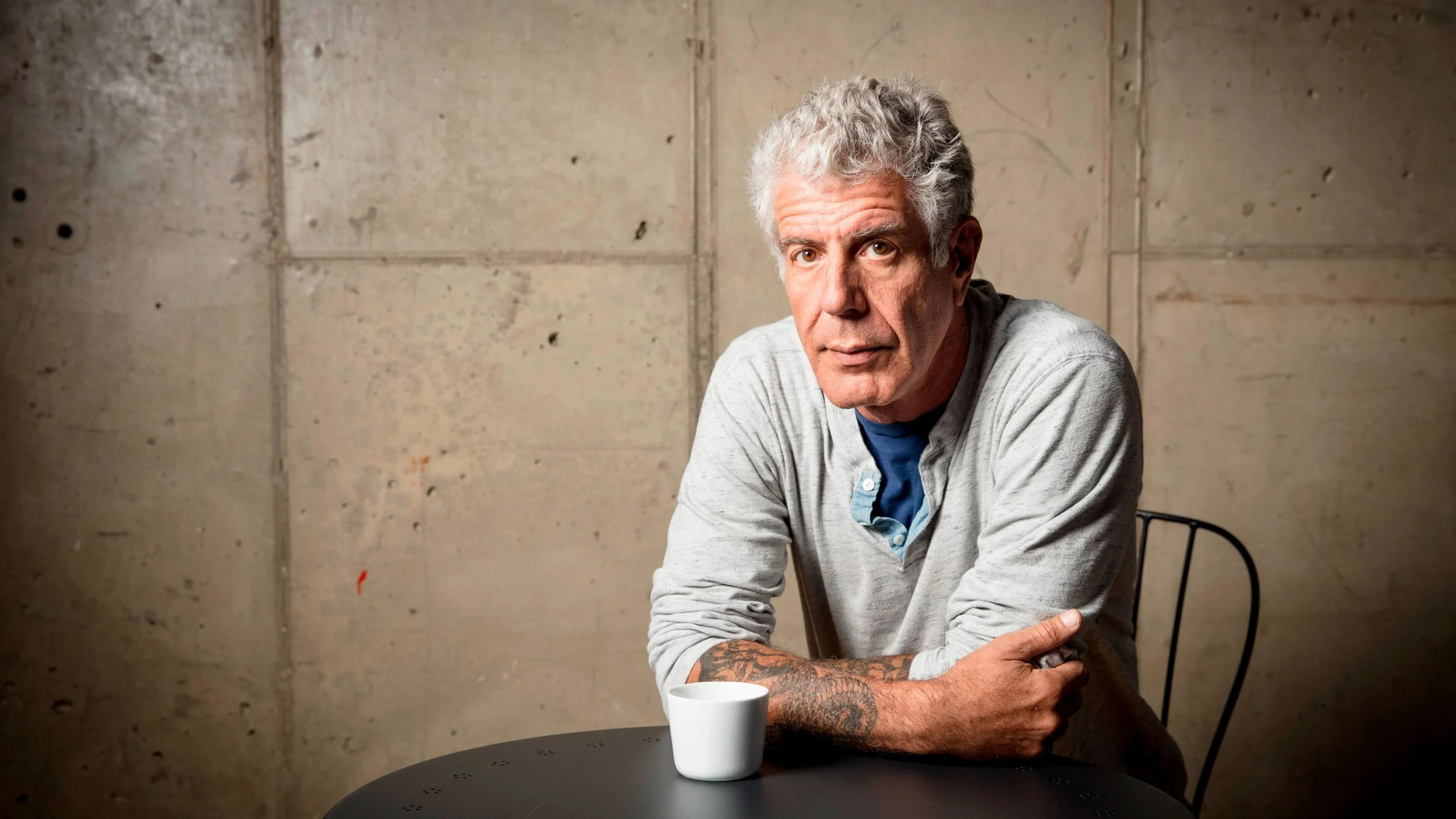
There's a YouTube channel called Schmindian working through Anthony Bourdain's sandwiches, one short video at a time. The format is exactly what it sounds like: make the sandwich, pair it with a beer, keep it under a minute.
I've been watching with one question I couldn't drop: what would I drink with these?
Bourdain was clear about his relationship with wine snobbery. In a 2016 Thrillist interview, he said he had zero interest in "who put the grapevines in." He wanted decent wine with decent food. Anyone who watched him closely knows that's not the whole picture. Sit him down in Provence with “a river of local wine” at a Sunday morning market, or in Marseille with Ripert over charcuterie and a carafe of something regional, and he wasn't exactly suffering.
He cared about whether the thing in the glass made what was on the plate taste better.
seven sandwiches and seven wine pairings
1. The Grilled Cheese
Sharp cheddar, caramelized onions, Japanese milk bread, mayo on the outside instead of butter, eggs.
Schmindian paired it with an Amber Ale. That's the correct call. Caramel malt mirrors those onions in a way that's almost too clean.
Wine is different. A Vouvray demi-sec, Chenin Blanc from the Loire Valley. It will bring honeyed stone fruit and enough acidity to cut the fat. Where the amber ale echoes the onions, the Vouvray lifts them.
2. The Lobster Roll
Whole lobster, mayo, celery, tarragon, lemon, butter, split-top bun. Narragansett in the video if you can find it, but a Blonde Ale will serve you well.
I'd open a Mosel Kabinett Riesling. I've spent time in the Mosel and the slate character is practically designed for shellfish. The residual sugar handles the homemade mayo. The acidity plays off the lemon. The tarragon finds a friend in the herbal notes.
3. The Bodega Sandwich
Bacon, two eggs, Swiss cheese, kaiser roll. Schmindian ate this for breakfast every day for a week. An Adjunct Lager will get your day going.
My pairing needs the most convincing: Crémant de Bourgogne. A French sparkling wine made outside Champagne using the same traditional method. Bubbles with a breakfast sandwich sound like a gimmick until you remember brunch exists and nobody questions sparkling wine at brunch.
4. The Banh Mi
This one's the complicated case. Schmindian's version includes house-made chicken liver pate, Spam as the protein, do chua from scratch, fresh herbs, hard-boiled eggs, chili, and fish sauce. A Bohemian Pilsner alongside.
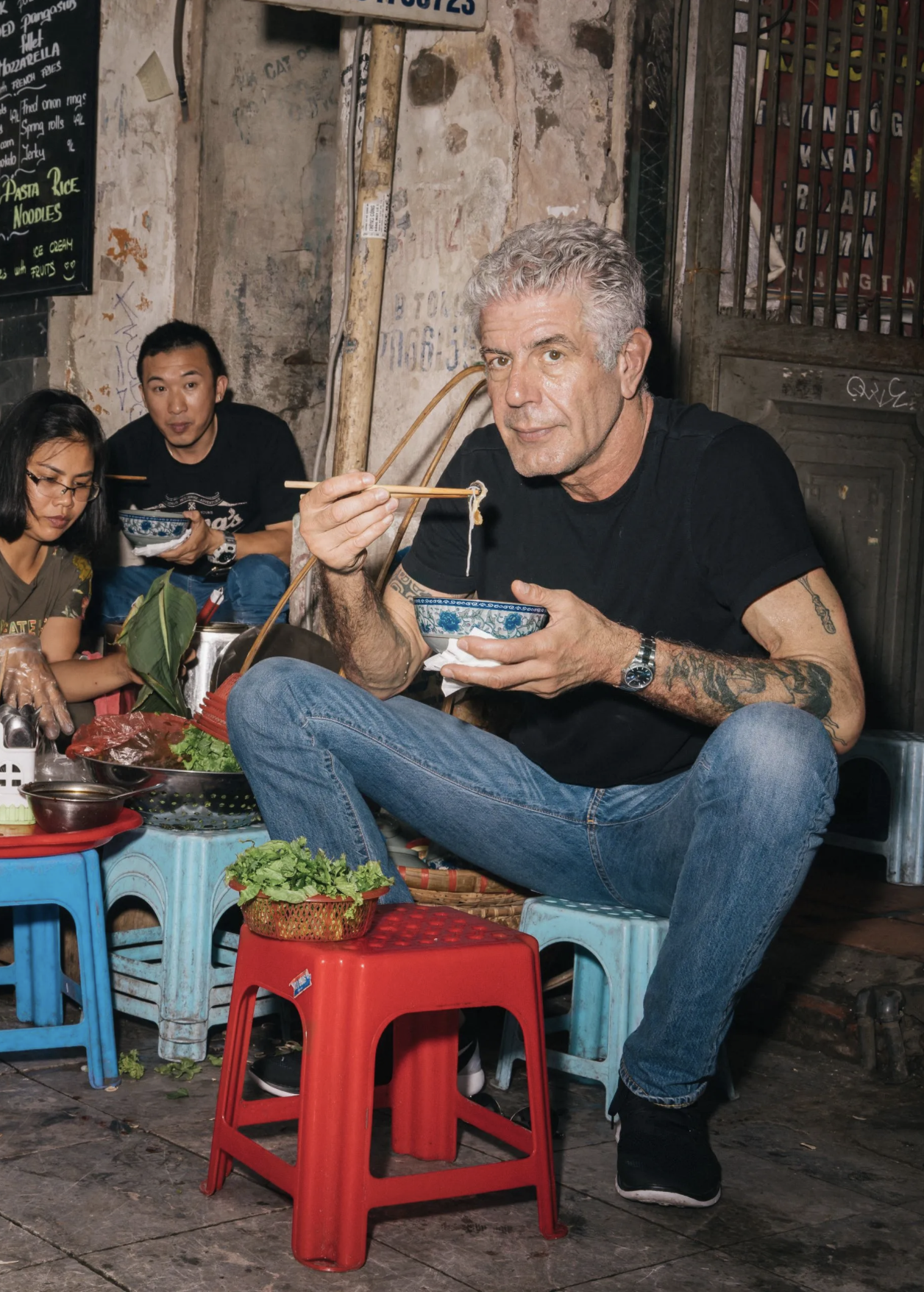
Photo by William Mebane of The New Yorker.
The pate changes everything. A standard banh mi pairs well with a crisp neutral white. Alsatian Gewurztraminer handles both sides of the equation: aromatic, lightly off-dry, rich enough to stand up to the liver while its lychee and rose character plays against the chili heat. Alsace sits on the French side of the Rhine but produces wines with a distinctly German soul. The dry Gewurztraminers there are among the most food-flexible bottles made anywhere.
The do chua takes 24 hours to cure properly. Schmindian uses sherry vinegar alongside standard white vinegar.
Also worth having on the table: skip both and drink Bia Hoi. A Vietnamese fresh draft, kegged daily, gone by nightfall, around 3% ABV, and about fifty cents a glass. Bourdain sat down for bun cha in Hanoi and ordered it cold, more than once. His love for Vietnam ran through A Cook's Tour and never really ended. The wine argument still stands.
5. The Sausage and Pepper Hero
Sweet and hot Italian sausages, onions, bell peppers, hero roll. From Appetites. Bourdain described his inability to resist the street fair version of this sandwich, served at questionable temperatures out of a dirty griddle.
Schmindian paired it with Irish Red Ale.
I'd open a Barbera d'Asti. It's a northern Italian red with high acidity, bright cherry fruit, and almost no tannin, which means it doesn't fight the fat or spice. The acid cuts through the sausage and works with the peppers. There's also a geographic logic to it: sausage and peppers is an Italian-American dish.
6. The Chopped Liver
Chicken livers, caramelized onions, schmaltz, hard-boiled eggs. Jewish deli food. Bourdain's affection for the Jewish deli ran deep, and the chopped liver from Appetites is treated with complete seriousness. He loved offal. He loved the deli. This sandwich makes that clear.
Schmindian paired it with an American Brown Ale.
My pick is Alsatian Pinot Gris. It's a rich, full-bodied white with a touch of residual sugar and enough acidity to cut through the schmaltz and liver fat. Alsace produces Pinot Gris differently than anywhere else. It is fuller and more structured and it has a long history with pâté and liver preparations.
7. The Mortadella
Crispy fried mortadella, provolone, mayo, Dijon, Kaiser roll. Bourdain's version is from Appetites, adapted from a sandwich he ate at Bar do Mané in São Paulo's Mercado Municipal, where they've been doing it since 1933. He loved it enough to put it in the cookbook.
Schmindian paired it with a Czech Lager.
Drink Lambrusco. This is the regional call and also just the right call. Lambrusco is sparkling, barely sweet, low alcohol, from Emilia-Romagna, which is the same region that produces mortadella. The bubbles cleanse your palate of the fat. The slight sweetness works with the provolone. This is not your grandfather’s lambrusco.
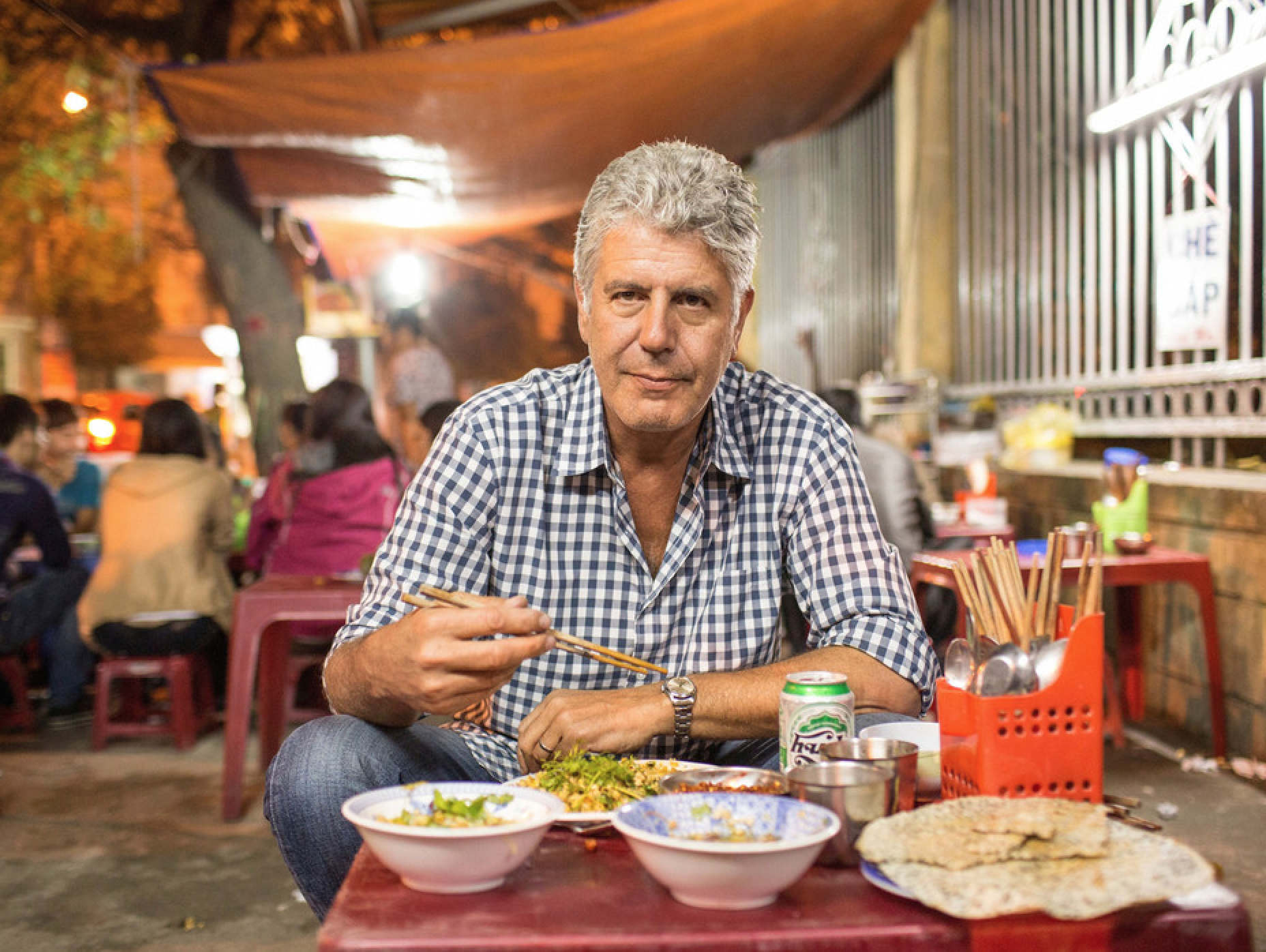
Photo by David S. Holloway, CNN
Bourdain believed great food belongs to everyone. The best bowl of noodles he ever ate cost two dollars on a plastic stool in Vietnam. The best sandwich might involve Spam and chicken liver and run you ten bucks to make at home.
Wine doesn't change any of that. It just adds another way to pay attention to what's in front of you.
Happy Bourdain Day. Go eat somewhere you've never been.
