
California Wine Is Changing
This essay emerges from a research project in my first year at the Culinary Institute of America, where I set out to answer a straightforward question: Does a California style actually exist, and if so, what might the future of California wine look like? What follows is my honest attempt to work through what is actually shifting in the state and why it matters.
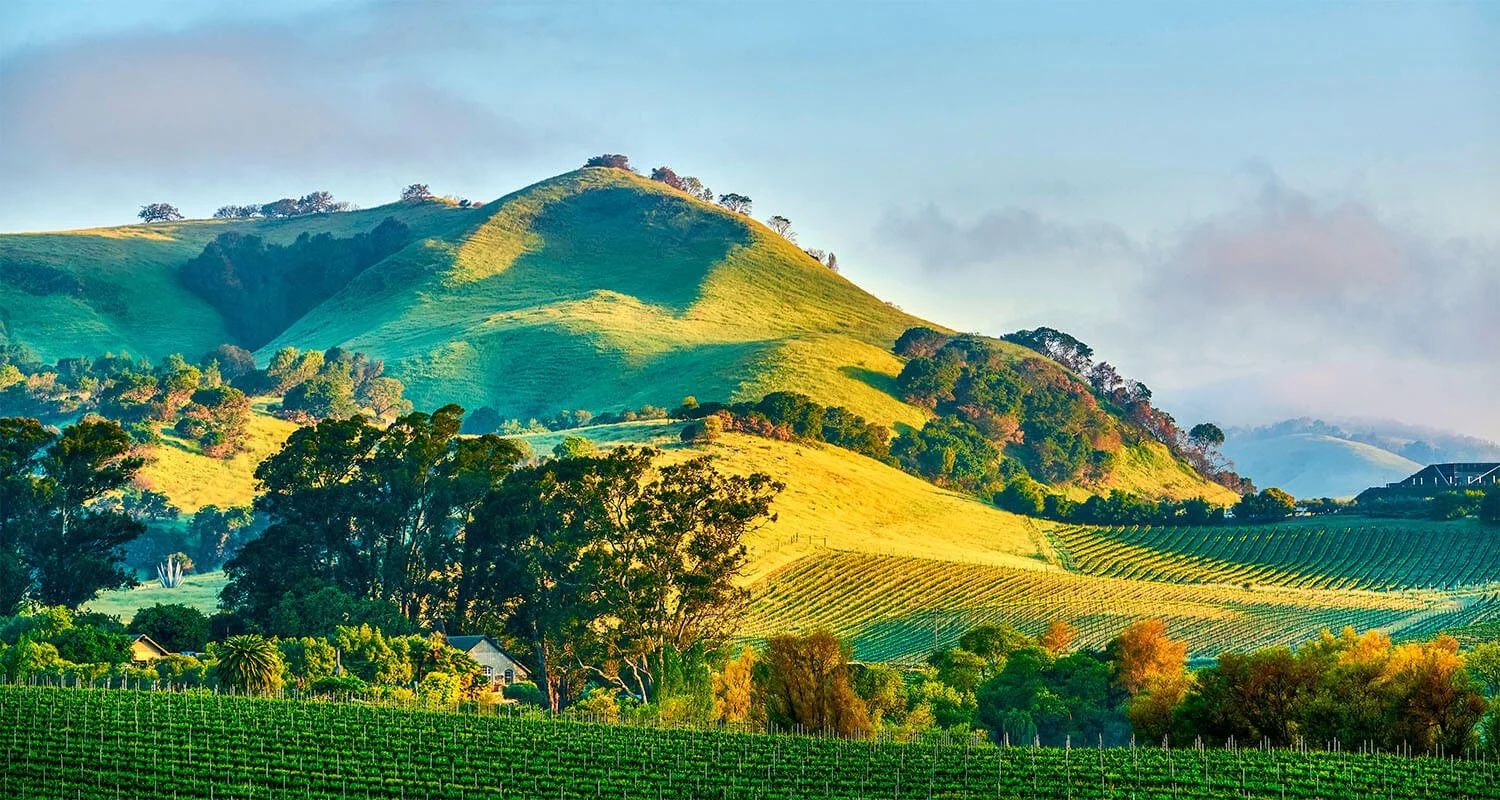
Napa Valley and the Mayacamas Mountains. Photo by Moniker Partners.
When most people think about California wine, they picture the same thing. Big, ripe, fruit-forward, oaky, and high in alcohol. That profile helped California become one of the most recognized wine regions, especially after the 1976 Judgment of Paris put Napa on the world map. For decades it worked. California wines sold well, critics loved them, and the style became the shorthand for what American wine meant.
The problem is that it was never the whole picture. And a growing group of producers is making sure that is no longer the only story being told.
How the traditional style got built
California's warm, dry growing seasons reliably produce ripe fruit with high sugar levels, which translates into full-bodied wines with elevated alcohol. Winemaking practices that amplified concentration and consistency (heavy extraction, new oak aging, late harvesting) became the commercial norm because they produced wines that performed well in export markets and earned high scores from influential critics.
But California's wine regions are not uniform. The state stretches across a range of climates, from cool fog-driven coastal zones to warm inland valleys, and the soil and elevation variation within that range is genuinely significant. Ted Hall has written compellingly about what he calls the "Sea of Sameness" in Napa Valley, the homogenization that results when producers chase a single style and critics reward conformity. The idea that a single stylistic identity could represent the whole state was always more of a marketing position than a geographic reality. The traditional California style was a commercially constructed norm, not an inevitable expression of the land. As Hall argues in his piece "Emperor's New Score," the cycle of critic-driven expectations and market-driven production created a self-reinforcing loop that obscured California's actual diversity.
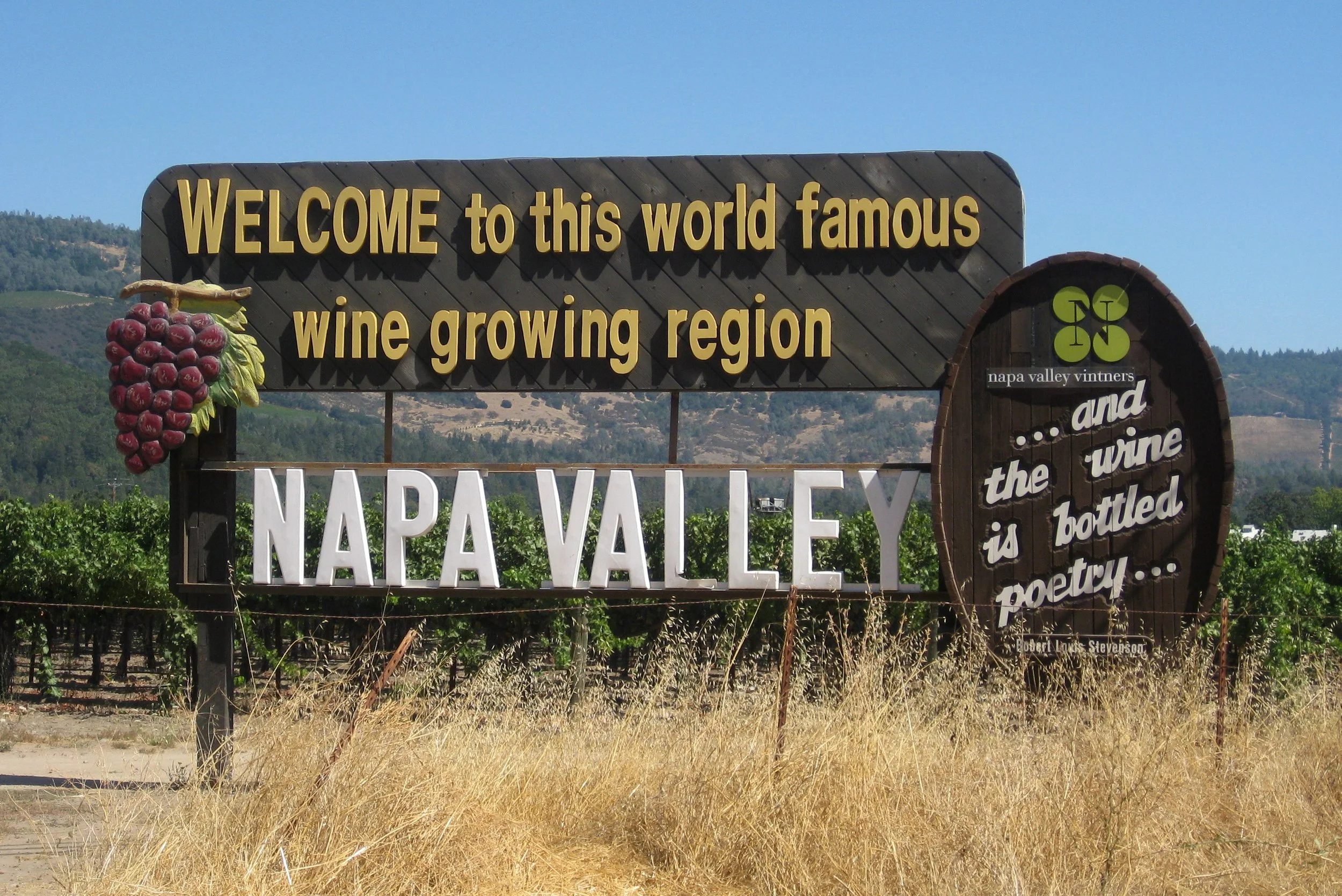
Photo by Wally Gobetz.
What the shift looks like in practice
Producers like Arnot-Roberts and Littorai represent clear examples of where things are moving. Both prioritize the vineyard site over any predetermined style. Instead of working toward a recognizable California profile, they let the specific character of each site drive what the wine becomes. Littorai farms biodynamically and regeneratively, treating soil health as inseparable from wine quality. Arnot-Roberts was among the first California producers to release an orange wine, which tells you something about their willingness to work outside conventional expectations.
The shift here is from "California style" to "California places." The argument these producers are making is that the state's greatest strength is not a unified flavor profile but the range and distinctiveness of individual sites. That is a fundamentally different way of thinking about what California wine is supposed to be.
The grape variety question
California's dominant commercial varieties of Cabernet Sauvignon, Chardonnay, and Pinot Noir were established because of market value and critical recognition, not because they were the best fit for the climate. Rhône and Mediterranean varieties, which evolved under conditions similar to much of California, are in many ways a more natural match for what the state's growing seasons actually produce.
This is where the Rhône Rangers movement connects directly. Tablas Creek Vineyard in Paso Robles spent decades demonstrating that Grenache, Mourvedre, Syrah, Roussanne, and Viognier can produce genuinely complex, site-expressive wines in California. The wines show savory, herbal, and structured profiles rather than the ripe fruit concentration that defines the traditional style. That work laid the groundwork for a broader conversation about which grapes actually belong in California and why. I attended the Rhône Rangers tasting earlier in April and wrote about it here.
Why this matters now
The numbers make the urgency hard to ignore. Silicon Valley Bank's 2026 State of the US Wine Industry Report found that total wine sales volume dropped to 329 million cases in 2025, down from 410 million cases in 2019. Total sales value fell to $74.3 billion, a decline of more than a billion dollars from the prior year. The industry is in a multi-year demand correction and SVB does not expect a bottom until 2027 or 2028.
The split between producers who are adapting and those who are not is becoming stark. Wineries in the top quartile reported 8% sales growth while those in the bottom quartile saw a 10% decline. The difference, according to the report, comes down to producers who are fundamentally rethinking how they engage with consumers rather than waiting for the market to turn around. As SVB's Rob McMillan put it plainly: this is not a cycle you can wait out.
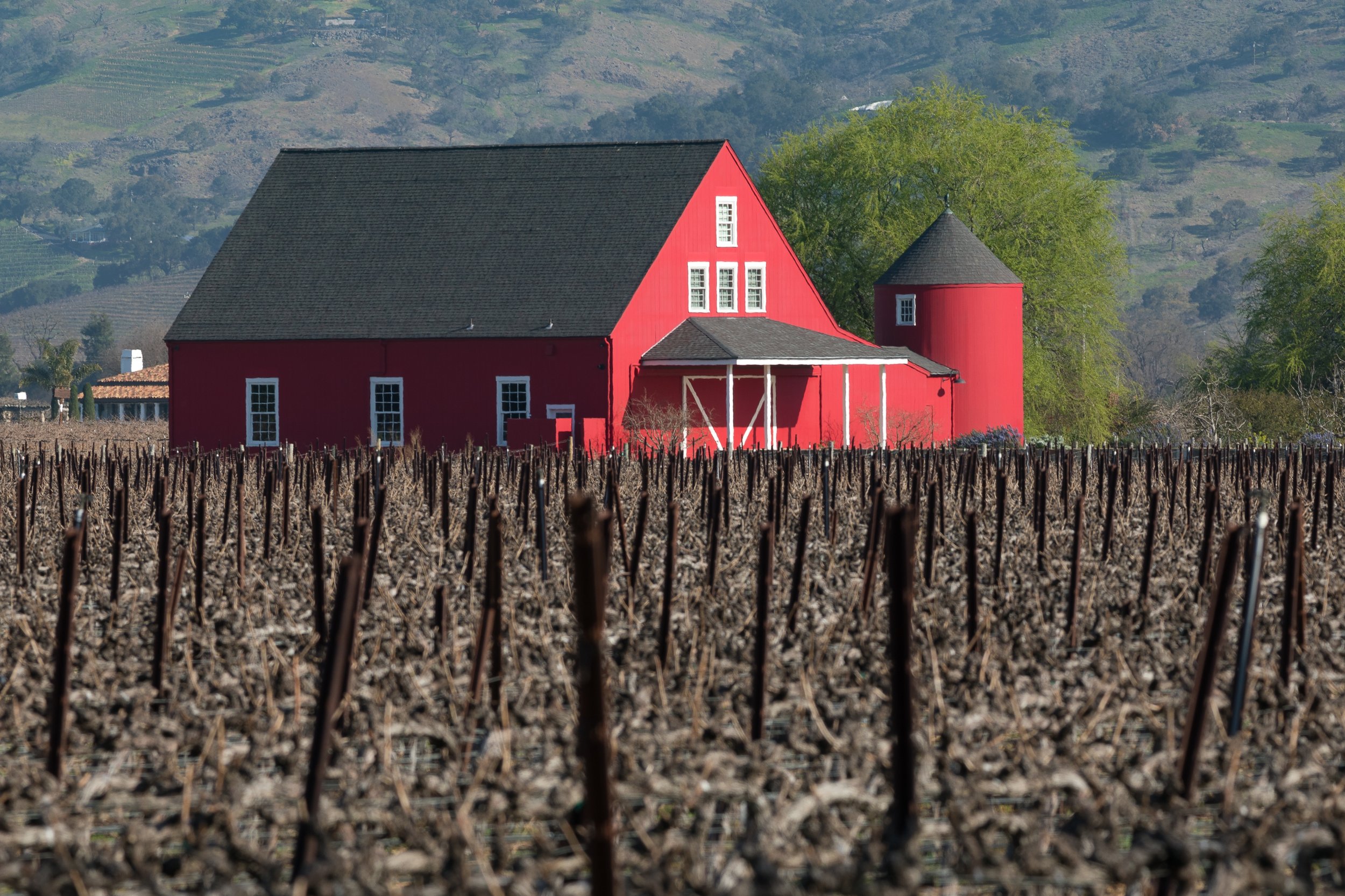
Along the Silverado Trail of Napa Valley. Photo by wikiphotographer.
That pressure is accelerating the shift already underway. Producers working through site-driven viticulture, alternative grape varieties, and sustainability-focused farming are not rejecting California's identity. They are offering something more specific and with more depth at a moment when the market is actively rewarding differentiation. The top performers are investing in narrative, building direct relationships with consumers, and making wines that give people a reason to care beyond the label.
Environmental pressures are pushing things further. Drought, heat, and wildfire smoke are now regular features of the California growing season. The decisions producers make to farm more resiliently are stylistic decisions too, whether they frame it that way or not.
The traditional style is not disappearing
To be clear: established producers will keep making wines that are ripe, consistent, and commercially successful, and those wines will keep selling. For producers operating at scale, consistency and brand recognition matter and the fruit-forward profile that defined California wine for decades still meets consumer expectations in volume channels.
The issue is not that the traditional style lacks merit. It is that it is no longer the only viable approach and the market is making that clear.
What comes next
California wine has always had more range than its reputation suggested. What is different now is that the range is becoming the story. I am departing for my CIA residency in Napa Valley, arriving just in time for the 50th anniversary of the Judgment of Paris. I will be paying close attention to how sustainability is being practiced and talked about across Napa and Sonoma, and whether the version of California wine I encounter on the ground matches the one that is emerging in the data. I hope you can follow along on my Instagram.
The producers bucking the traditional style are not outliers. They are the clearest signal of where California wine is headed.
Further reading
SVB 2026 State of the US Wine Industry Report: Full data behind the market trends referenced here
Ted Hall: "Sea of Sameness": Why Napa wine brands are drowning in homogenization
Ted Hall: "Emperor's New Score": Why Napa's reliance on numerical prestige is failing the dinner table
Tablas Creek Vineyard: Our History: the Beaucastel partnership and the roots of the American Rhône movement
Arnot-Roberts: clear examples of site-driven California winemaking
Littorai Wines: Generative Agriculture: how regenerative farming shapes wine style
Far & Low: Rhone Rangers: My dispatch from the Texas tasting
