
Court of Master Sommeliers Introductory Exam: What to Expect and How to Prepare
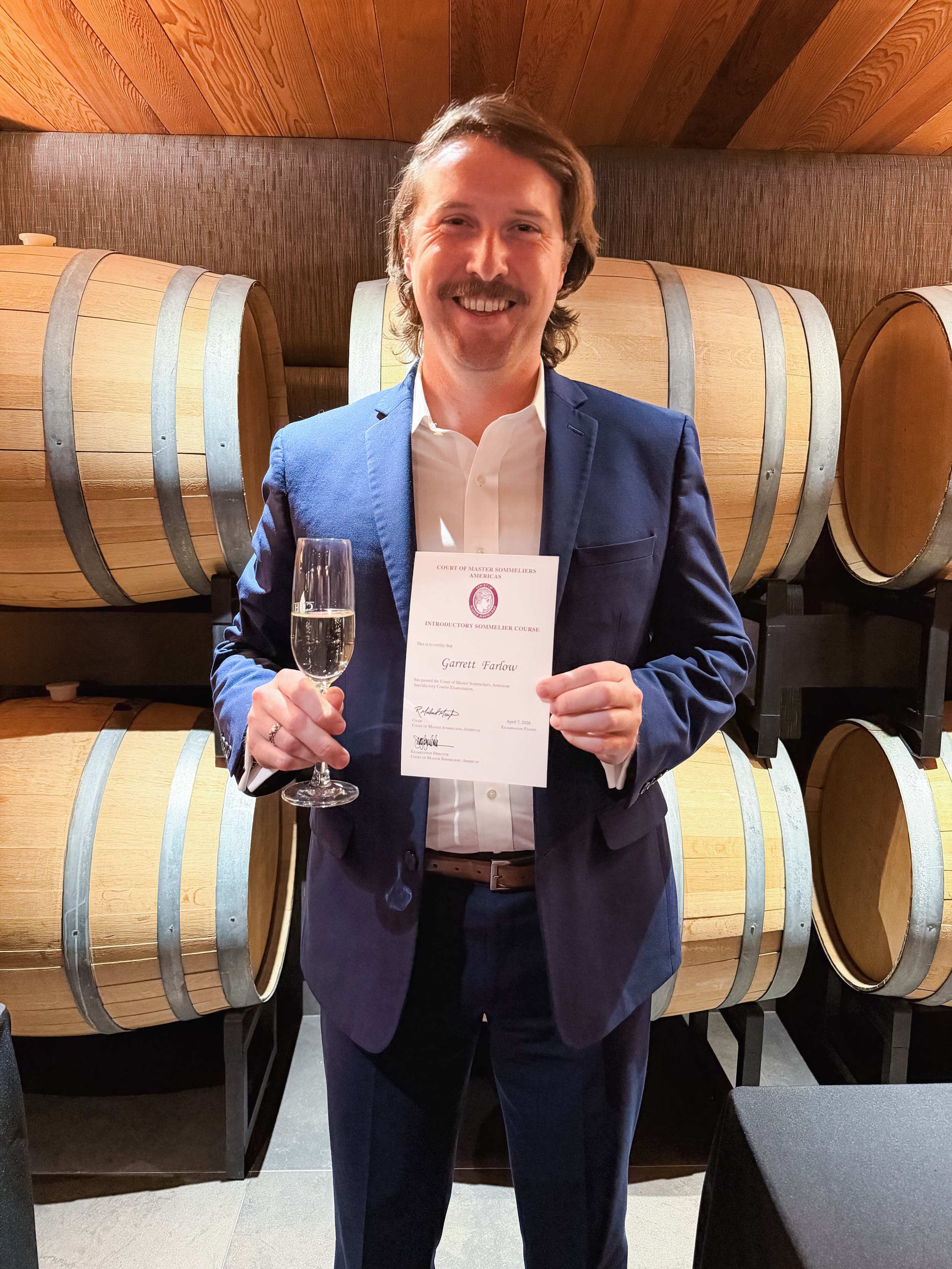
I went through over 1,700 flashcards for this exam. That’s no exaggeration. It is just what it took to feel ready walking into a room of fifty people in Chicago for one of the most respected credentialing exams in the wine world.
I passed with a 96%, missing only three questions. But the score is almost beside the point. What I came away with was something closer to a framework than a credential, and that feels like the more useful thing to write about.
What the Court of Master Sommeliers actually is
The Court of Master Sommeliers (CMS) is the premier international organization for beverage professionals. Founded in the UK in 1969 and formalized in 1977, it runs a four-level credentialing program: Introductory, Certified, Advanced, and Master. The Master Sommelier diploma is one of the most difficult credentials in any professional field, with fewer than 300 people in the world currently holding it.
The CMS has a reputation for rigor and it earns that. But what came through more than anything over those two days was how genuinely the Master Sommeliers want you to succeed. This is not an organization protecting a velvet rope. It is a group of people who love wine and hospitality deeply and want others to feel the same way.
The room itself made that clear. The fifty or so people who showed up for this exam were not all industry professionals chasing a credential. There were stay at home parents, retirees, servers, bartenders, restaurant managers, and beverage directors. More than a few people were there simply because this had been on their bucket list for years. That mix of backgrounds and motivations said something important about what the CMS Introductory actually is: an open door, not a gatekeeping mechanism. Anyone willing to do the work belongs in that room.
What the exam actually covers
Most people assume this is purely a wine exam, but it is not. The Introductory exam covers wine theory and geography extensively, including appellations, grape varieties, production methods, and regional styles. But it also goes deep on distilled spirits, cocktails, beer, and service. You are expected to understand how to open and serve a bottle properly, the mechanics of a professional wine service, and the basics of what distilling liquors and spirits. The beverage world is broader than the wine aisle and the CMS reflects that from day one.
The two-day format
Day one is purely instruction. The Master Sommeliers move through the material at a pace that rewards preparation. I filled a full legal pad with notes, not because the content was overwhelming, but because I commit things better to memory that way. Across the two days of review sessions, we worked through 20 wines together, connecting them with the region we had recently covered, and building vocabulary and context along the way.
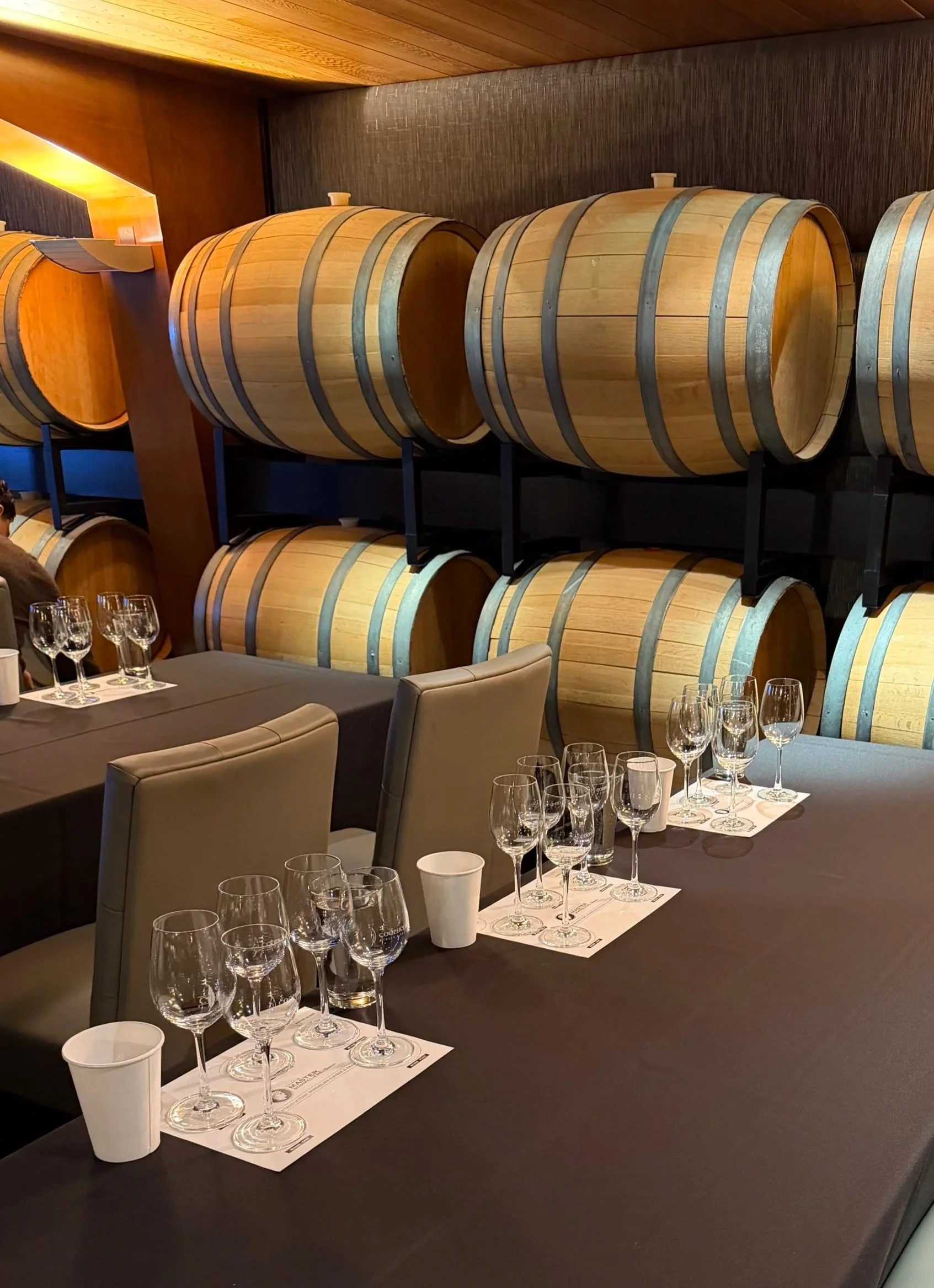
The blind tasting component deserves its own explanation. The session includes a group deductive tasting exercise led by the Master Sommeliers, covering two wines. The point is not to identify the wine. It is to learn the deductive method, how to move systematically from what you see, smell, and taste toward a reasoned conclusion that is used in the successive levels of CMS. Getting introduced to that discipline in a room with Master Sommeliers guiding the process is one of the most valuable parts of the whole experience. It is also why CMS introduced a standalone course dedicated to the Deductive Tasting Method Workshop, but beware, you must have completed the introductory Sommelier certification in order to participate.
Day two will focus on any remaining areas not covered on your first day and the exam will be held in the afternoon. It is seventy questions covering everything from the instruction sessions and the workbook you receive upon enrollment in the course.
What comes next: the Certified exam
The Introductory is a foundation. The Certified exam is where the real work begins, and the format reflects that. It is a one-day, in-person examination with three components that must all be passed in the same sitting.
The first component is a written theory exam covering wine, spirits, beer, and service at a meaningfully higher level than the Introductory. The second is a blind tasting of four wines, two white and two red, evaluated using the Court's deductive tasting method and completed in 45 minutes. This is where the group exercise from the Introductory becomes a solo performance. The third component is a practical service examination, where candidates demonstrate tableside protocol including sparkling wine service and decanting in front of a judging panel.
The CMS recommends waiting at least a year after the Introductory before sitting for the Certified, and at least three years of industry experience is strongly suggested. About 66 percent of candidates pass. That number sounds reassuring until you realize the people in that room have been preparing seriously. The Certified is the first real gate on this path and I plan to treat it like one.
In the meantime, I am also working toward my WSET Level 2 Award in Wines, which I will be sitting for in June. The two programs cover overlapping ground but approach it differently, and I find that the combination is making both sharper. More on that as it gets closer.
How to prepare if you are considering CMS
Start earlier than you think you need to. The material is broad enough that cramming does not work. Give yourself at least six to eight weeks of consistent study, even if it is just half an hour each day. Flashcards are genuinely useful, as the 1,700 I made can attest, but the goal is not memorization for its own sake. The goal is building enough familiarity with regions, grapes, and production methods that the connections start to feel intuitive rather than forced.
Get comfortable with a map. Geography is the backbone of the exam and if you do not know where things are, the rest of the material floats. The Court of Master Sommeliers has its own study guide and it is worth reading every page. Taste as much as you can before you go. You do not need to be a blind tasting expert, but having a working vocabulary for what you are experiencing in the glass will make the deductive tasting sessions far more useful.
And show up ready to take notes. The instruction is genuinely good and you’ll rarely have three Master Sommeliers as instructors.
What I came away with
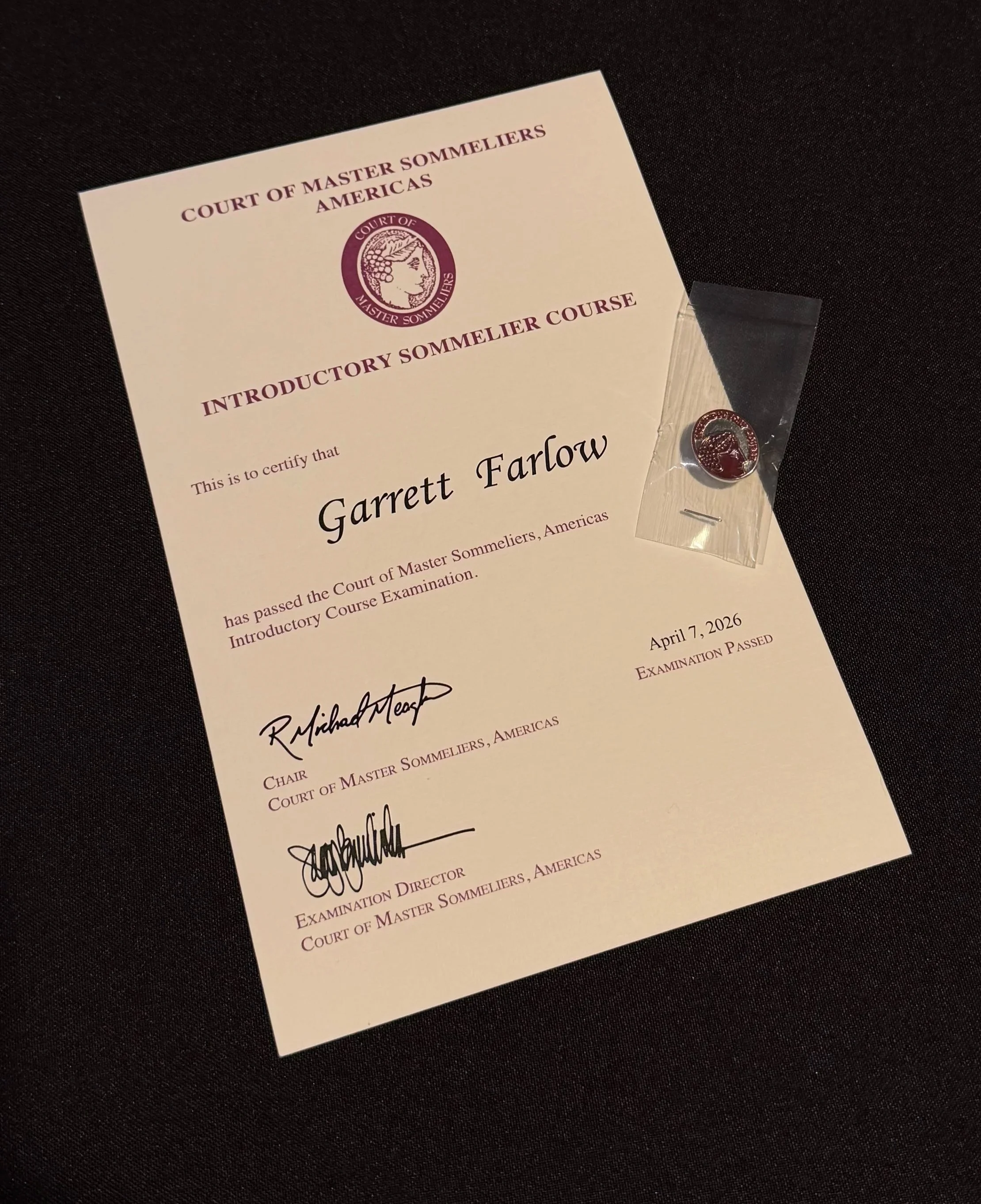
Passing feels like a checkpoint, not a finish line. The Certified exam is next and that is a different kind of preparation entirely. But the thing that stayed with me most from those two days had nothing to do with the score. It was the approach the CMS brings to the material, not memorizing soil types or cataloguing aromas, but understanding the why behind all of it. How a place became what it is. How climate, history, and human decisions end up in the glass in front of you. When you make that connection, wine stops being a subject and starts being a story.
That is the version of wine I got into this for. Teenage me watching SOMM for the first time would find all of this pretty funny.
One more thing worth mentioning: while I was in Chicago, I stumbled into House of Glunz, the oldest continuously operating liquor store in America, open since 1888. You can read more about that here.
Resources
Court of Master Sommeliers Americas: Certification levels, exam registration, and study resources
CMS Credentialing Ladder: Introductory through Master Sommelier
