
How To Read A Wine list
For a long time, wine lists made me genuinely uncomfortable. Not because I did not care about wine, but because I cared too much about not looking like I did not know what I was doing. There is real pressure in that moment. You are at a table, people are watching, and someone just handed you a bound document full of names, regions, and grape varieties you may only half recognize. The fear of choosing wrong is enough to make most people do what I did for years: scan for the second cheapest bottle, feel clever about it, and move on.
It turns out that strategy is also a trap, but more on that in a minute.
Once you understand how wine lists are actually built, they stop being a test and start being an invitation. Here is what helped me get there.
What a traditional wine list looks like
Most restaurant wine lists follow the same basic structure. Take a place like Seasons 52, a national chain with a well-regarded wine program built by a Master Sommelier and recognized by Wine Spectator. Their list does what most upscale lists do: it organizes wines by type first, then by grape variety or region within each category. Whites. Reds. Rosé. Sparkling. Under reds you find Cabernet Sauvignon from Napa, Pinot Noir from Oregon, maybe a red blend from the Rhone. Each with a range of producers and prices.
That structure works well if you already know what you like. If you walk in knowing you want a Willamette Valley Pinot Noir, a list like this gets you there in about ten seconds. But if you are still building that vocabulary, it can feel like being handed a map with no legend. You recognize some of the words. Most of them remain vague. The prices do not seem to follow any obvious logic. You order the second cheapest Cabernet and tell yourself it was intentional.
And then there is Bern's Steak House in Tampa, Florida. Over 6,800 selections. More than half a million bottles in the cellar. Their wine list is bound like a book. It has held the Wine Spectator Grand Award every year since 1981. I bring this up not to intimidate you further but to make a point: even the most experienced wine drinkers walk into Bern's feeling a little overwhelmed. The scale of a list is not a measure of how much you should already know. It is a reminder that nobody knows everything, and the goal has never been to master the whole thing at once.
A few things that actually help
Start with where the wine comes from. Even if you do not recognize the producer, region gives you a reliable starting point for style. A Sauvignon Blanc from New Zealand is going to feel different than one from California. A red from Rioja drinks differently than one from Napa. You do not need to memorize producers. You just need a general sense of place.
Pay attention to price tiers. Most lists are structured in bands even when it is not obvious. The cheapest and most expensive options are rarely where the best value lives. The middle third of a well-curated list is usually where the sommelier put the most thought. And yes, the second cheapest wine is almost always the most marked-up bottle on the list. Restaurants know that move. Go third or fourth if you are price-conscious and want something worth drinking.
If a restaurant carries multiple wines from the same region or the same producer, that is usually intentional. It signals confidence. Follow that signal.
And if you are unsure, ask. The key is giving your server something to work with. Something like "I usually like lighter reds with some acidity" or "I want something bold to stand up to this steak" is enough to get a useful recommendation. You do not need the vocabulary of a sommelier. You just need a direction.
What a CIA wine assignment taught me about building a list differently
In my first year at the Culinary Institute of America studying wine and beverage management, one of our assignments was to build a wine list from scratch. Not just pick bottles, but design the entire organizational framework, write the descriptive copy, build wine flights, and justify every decision in writing. The kind of assignment that forces you to think about what a wine list is actually trying to do.
I organized mine entirely around climate.
The premise was this: instead of asking guests what grape they want, ask them what kind of place they want to taste. A cool coastal region produces something fundamentally different than a hot inland valley, and once you understand that, the grape variety almost becomes a detail. Climate is the organizing principle. Everything else follows.
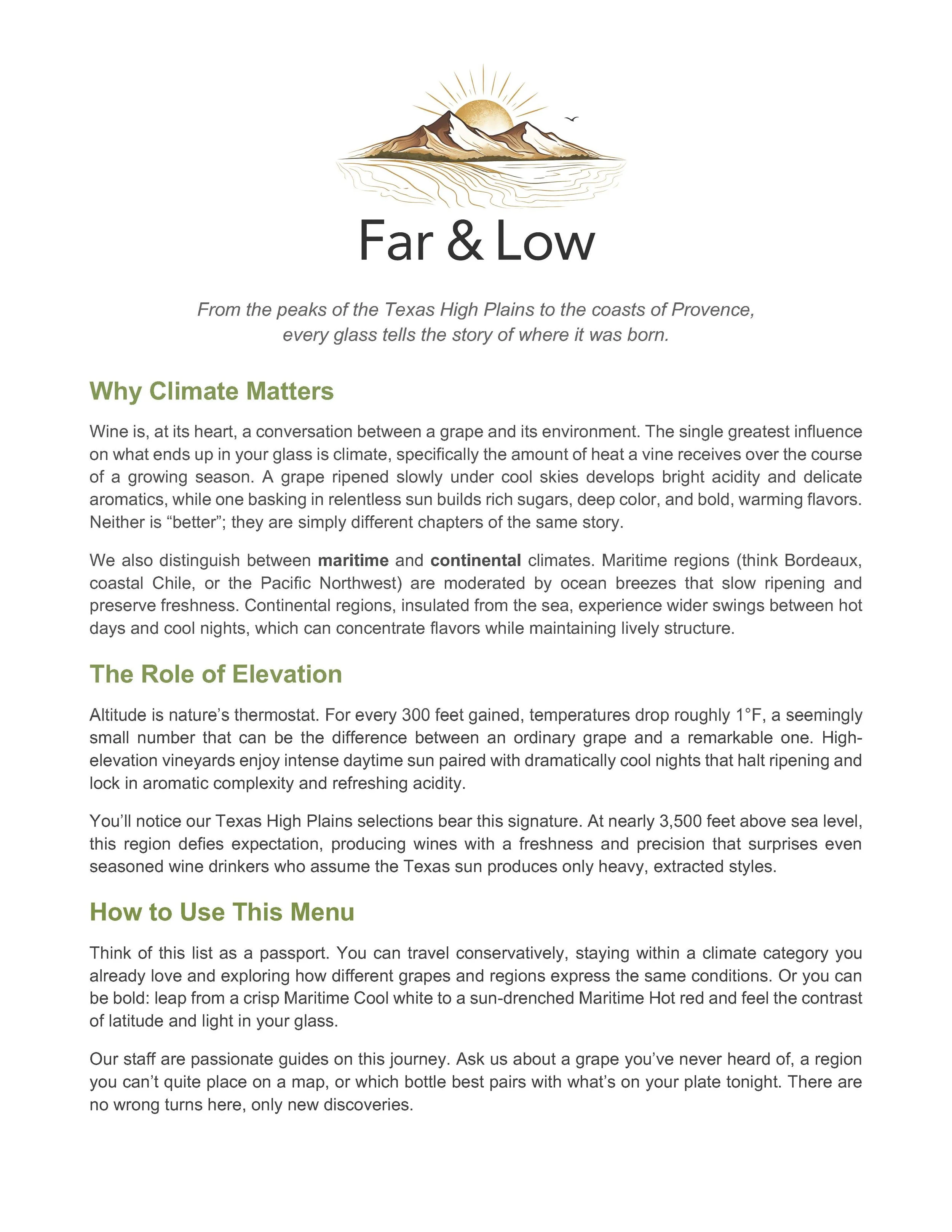
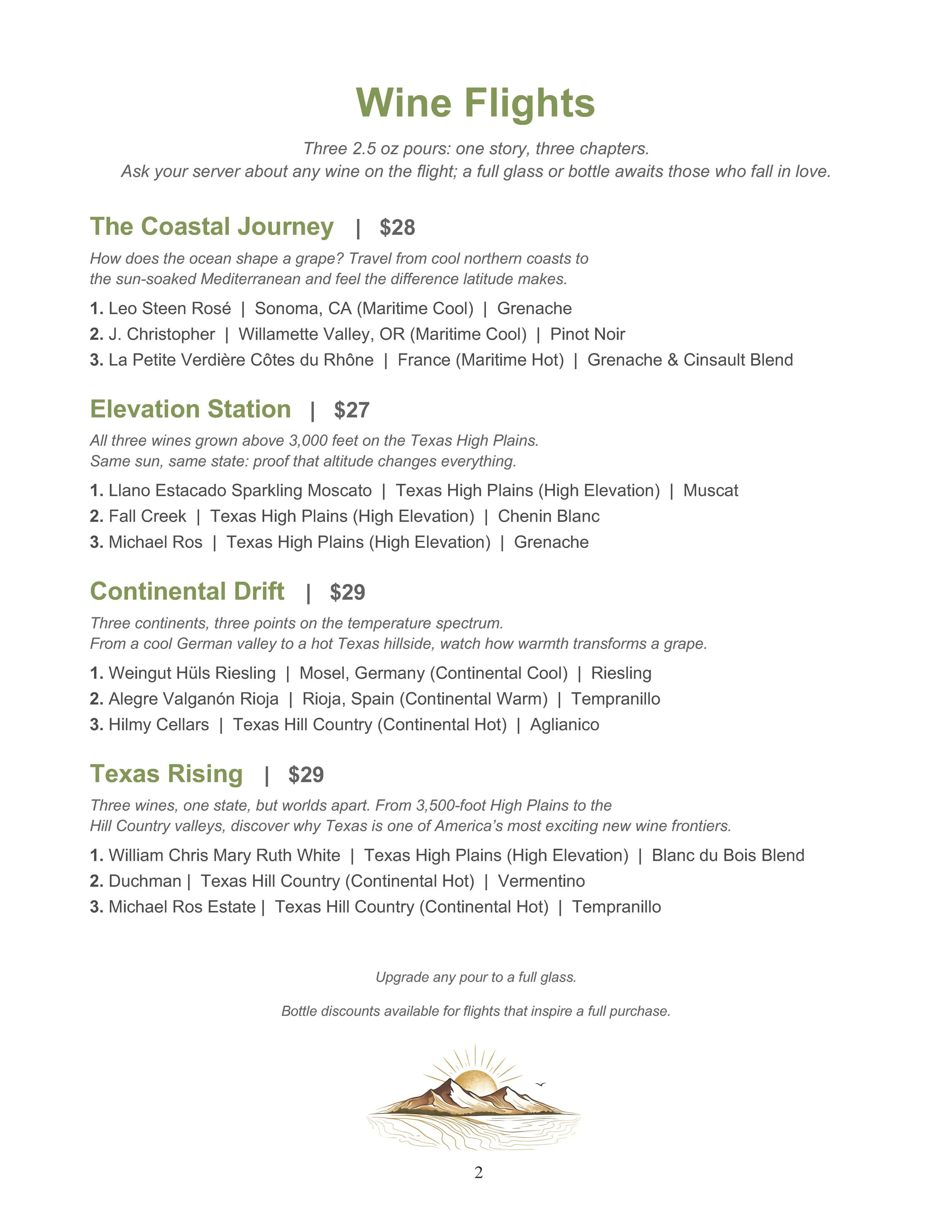
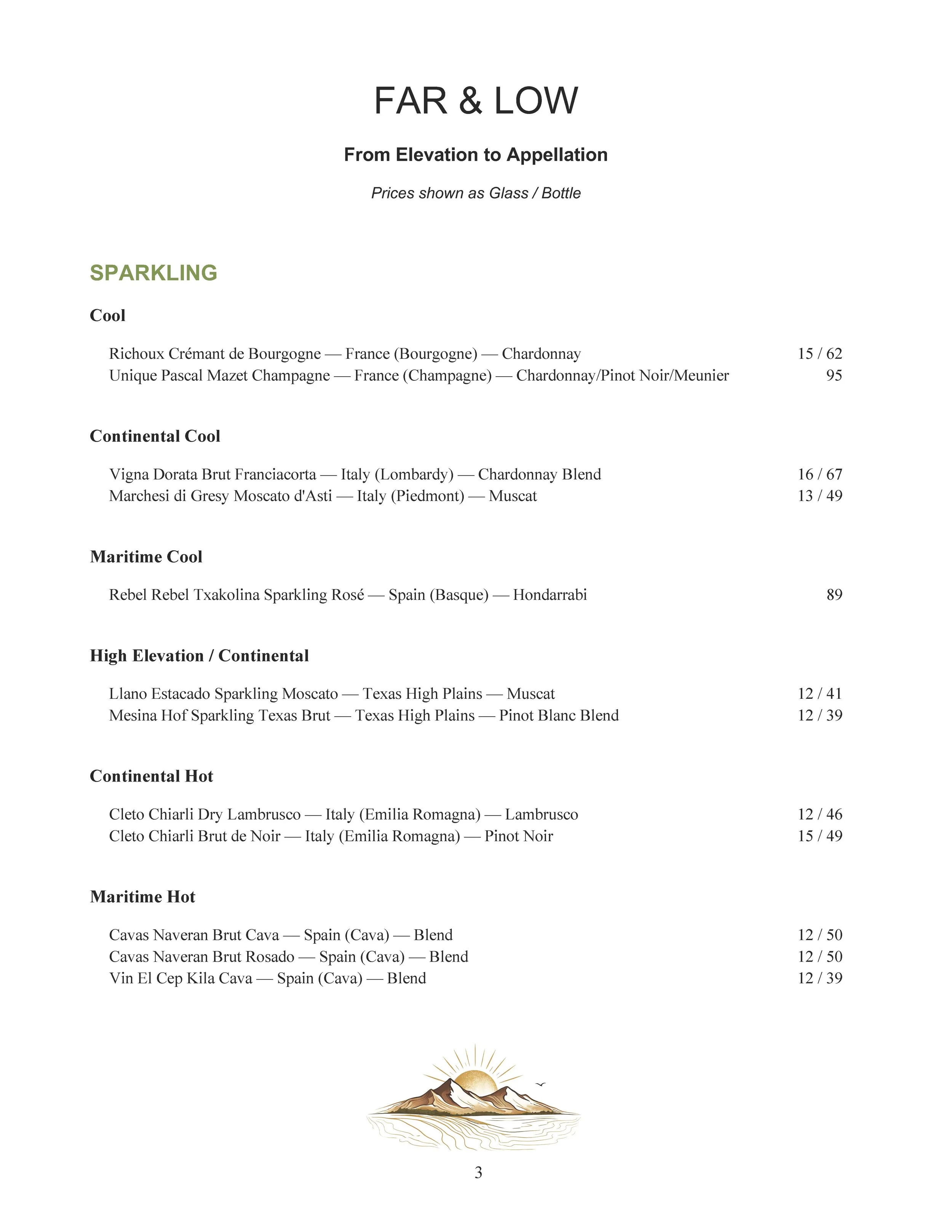
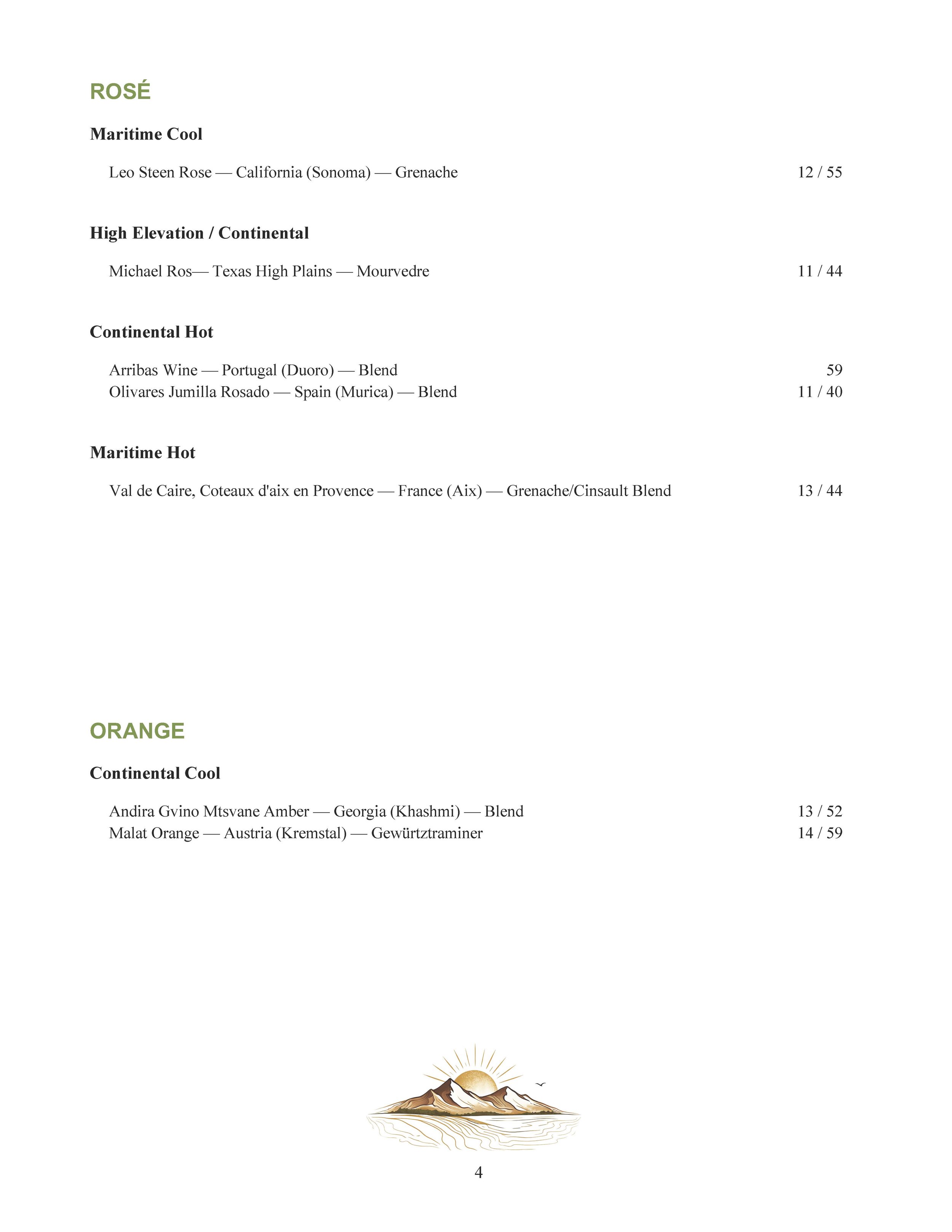
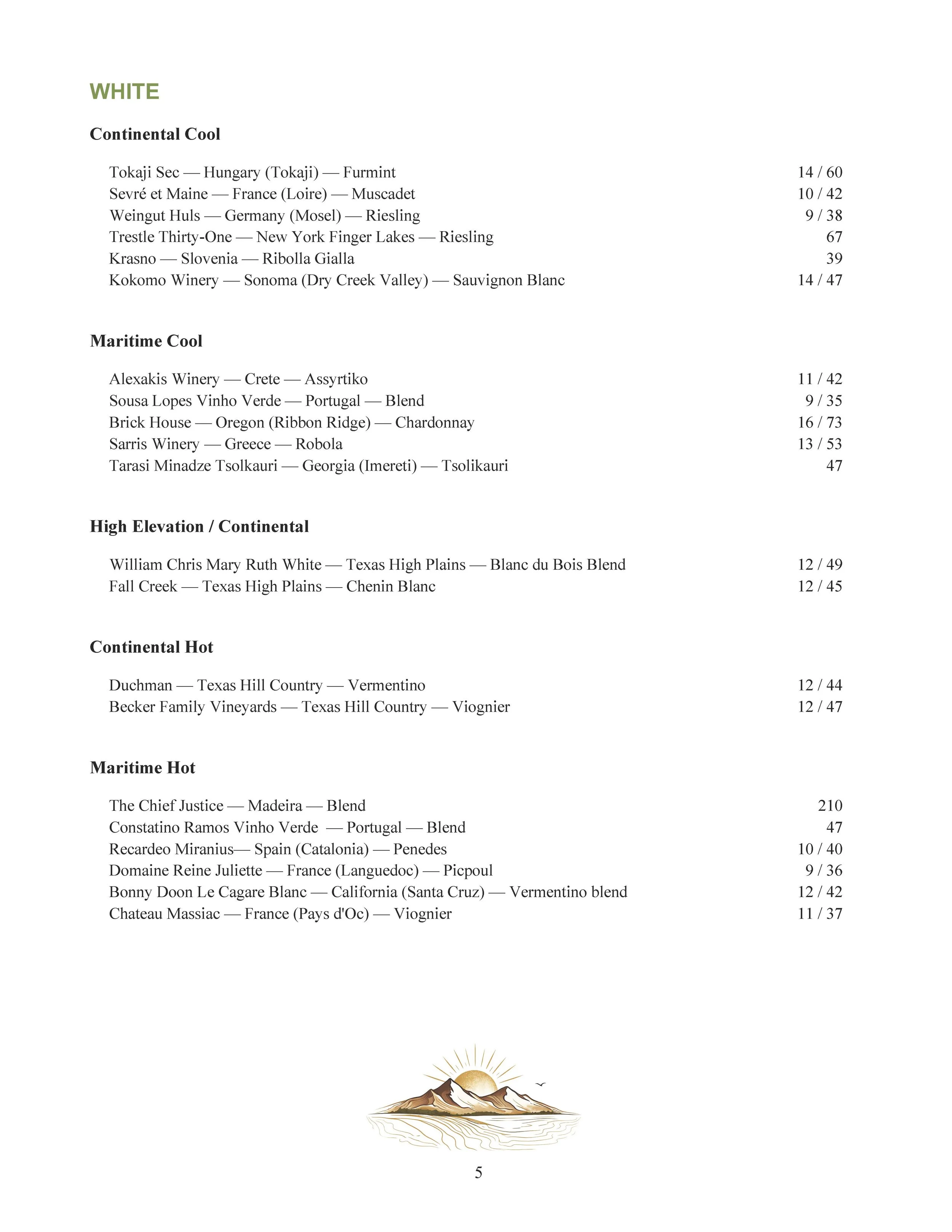
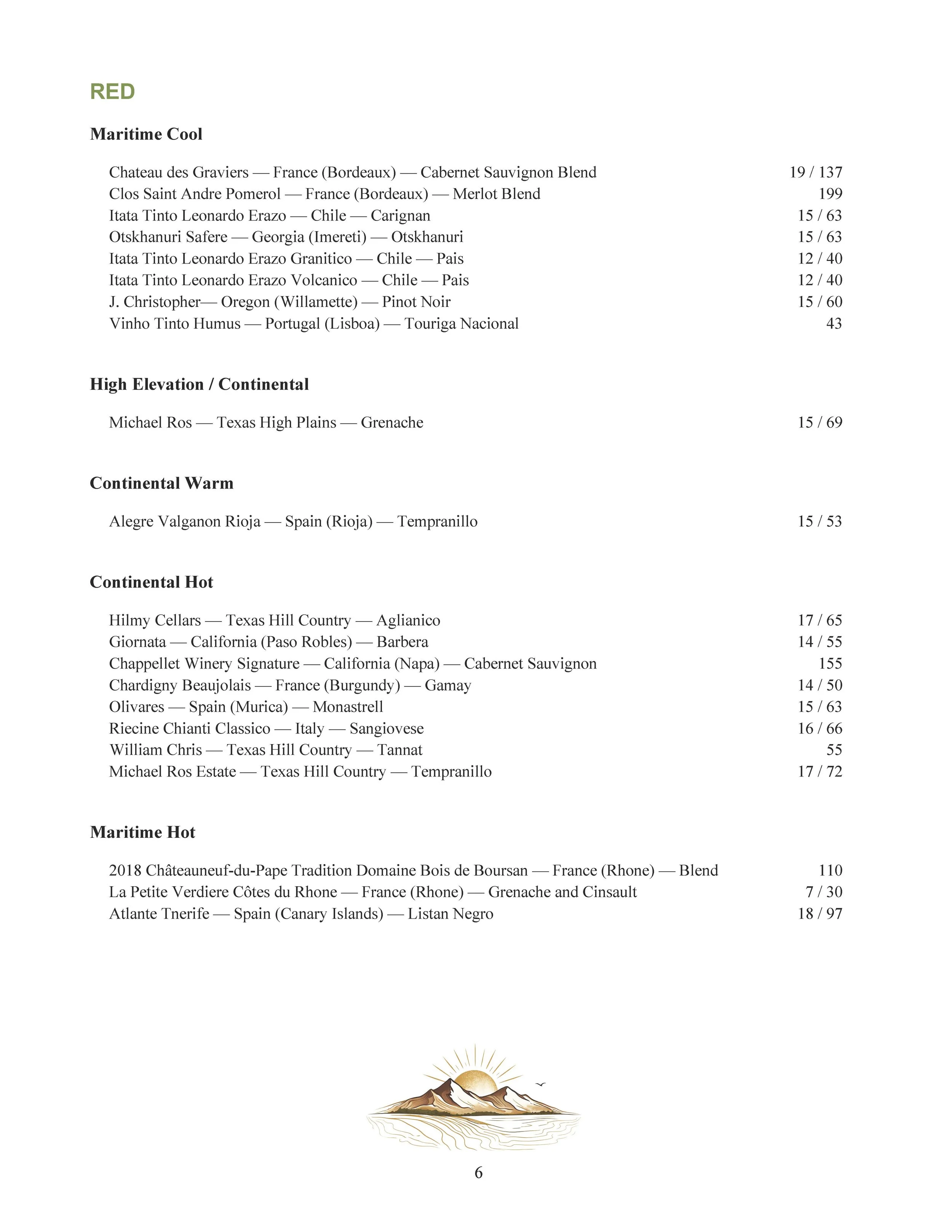
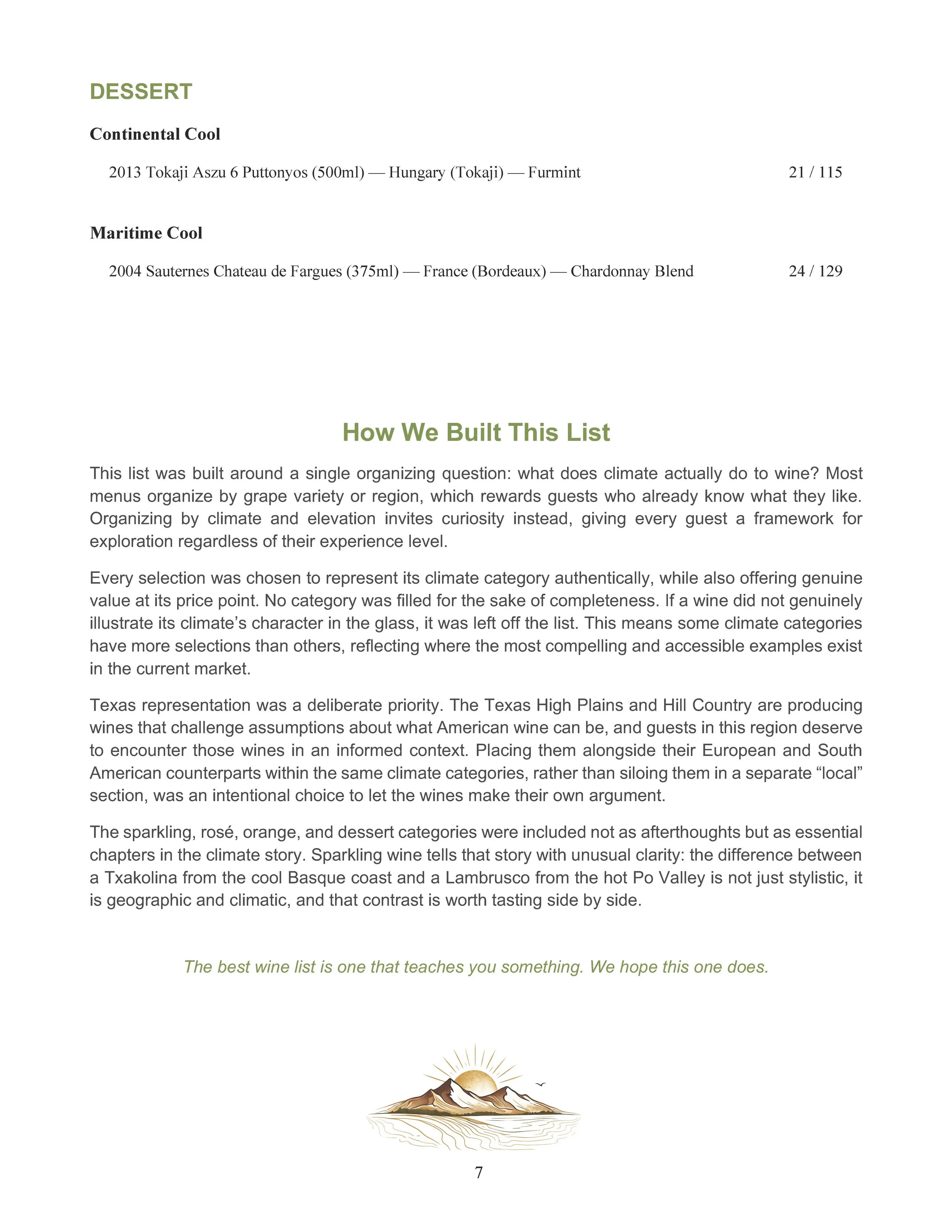
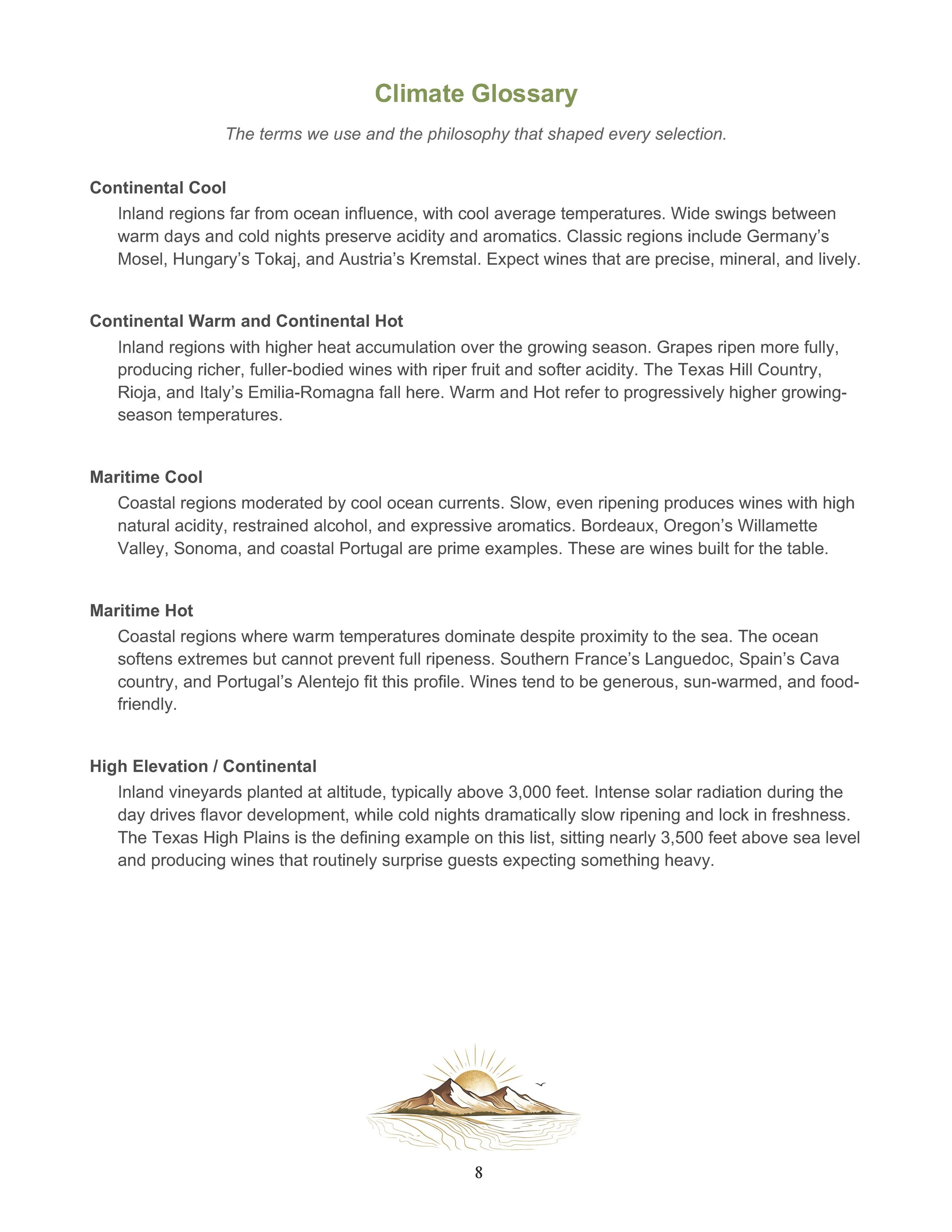
The list I built grouped wines into categories like Continental Cool, Maritime Hot, and High Elevation. A Mosel Riesling from Germany sat alongside a Tokaji Furmint from Hungary, not because they are the same grape but because they come from similar inland cool climates and share a family resemblance in the glass: precision, acidity, and a kind of energy that warmer regions cannot replicate. A Châteauneuf-du-Pape from the Southern Rhone and a Texas Hill Country Aglianico both landed in hotter categories, and you can taste that connection even if you would never have thought to put France and Texas on the same page.
Texas was a deliberate priority. The Texas High Plains sits nearly 3,500 feet above sea level and produces wines with a freshness and precision that surprises people who assume the Texas sun can only make heavy, extracted reds. Placing those wines alongside their European counterparts rather than isolating them in a separate local section was an intentional choice to let the wines make their own argument. I care a lot about that argument.
I also built four wine flights around the same logic. The Continental Drift flight moved from a Mosel Riesling to a Rioja Tempranillo to a Texas Hill Country Aglianico. Three continents, three points on the temperature spectrum, one clear story about how warmth transforms a grape. That is a different kind of wine education than a list organized by color.
What this means the next time you open a wine list
You are probably not going to walk into a restaurant and find a climate-organized wine list. But the framework is useful anyway because it shifts what you are looking for. Instead of scanning for a name you recognize, you can start asking what kind of place a wine comes from. Coastal and cool, or inland and warm? High elevation or valley floor? Those questions move you toward style and away from the anxiety of memorizing producers you may never see again.
The best wine lists, however they are organized, are trying to tell you something. Your job as a guest is just to find the thread and follow it.
FUN FACTS
The second cheapest wine is almost always a trap. Ordering it feels like a savvy move. Restaurants know this and price accordingly. The second cheapest bottle on most lists carries the highest markup on the menu. Go third or fourth if you want real value.
Bern's Steak House in Tampa holds the Wine Spectator Grand Award every year since 1981. Their cellar holds over half a million bottles across more than 6,800 selections. Their wine list is bound like a novel. It is widely considered one of the greatest restaurant wine collections in the world.
Tour d'Argent in Paris has been pouring wine since 1582. Their wine list runs 400 pages and offers around 14,000 selections. The restaurant encourages guests to arrive hours early just to read it properly.
The average restaurant marks wine up two to three times its retail price. A bottle you could buy at a wine shop for $20 will typically appear on a list at $40 to $60. This is one reason a well-curated glass program can offer better value than buying a bottle you are unfamiliar with.
The word sommelier has nothing to do with wine. It comes from the Old French word for pack animal driver, referring to the person who managed supplies on a journey. The role evolved toward overseeing the lord's table and eventually the cellar. The title stuck.
Thomas Jefferson was one of America's first serious wine list builders. As U.S. Minister to France in the late 1780s, he traveled through French and Italian wine regions taking detailed notes on producers, vintages, and prices. He used that knowledge to stock the White House cellar and is credited with introducing Madeira, Burgundy, and Champagne to the American dinner table in a serious way.
